Laboratory products
Published over 7 years ago. See the latest and most current information on Laboratory products.
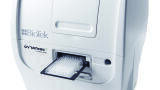
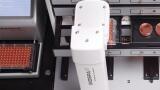
BioTek’s Synergy™ Neo2 Multi-Mode Microplate Reader offers even more powerful performance and assay flexibility for screening and core laboratories with an optional TRF laser. Along with dual photomultiplier tube (PMT) detection, the 337 nm laser provides the exceptional processing speed and maximum sensitivity necessary for high-quality time-resolved fluorescence (TRF) and time-resolved fluorescence resonance energy transfer (TR-FRET) results.
Synergy Neo2 provides a wide range of capabilities to facilitate an endless number of high-throughput biochemical and cell-based assay workflows. Patented Hybrid Technology™, with variable bandwidth quad monochromators and sensitive high-transmission filter optics, enables wide flexibility in assay choice. Advanced environmental controls, including incubation to 65ºC, CO2/O2 regulation, and variable shaking, along with direct bottom detection, support live cell assays. Gen5™ Software controls Synergy Neo2 and enables powerful data analysis. Synergy Neo2 may be linked with BioTek’s BioStack™ Neo or third-party robotic systems for walk-away automation and further enhanced throughput, and may also be easily integrated with any laboratory information management system (LIMS).
More information online:
ILM 51.6 Sept 2026





 Product directory