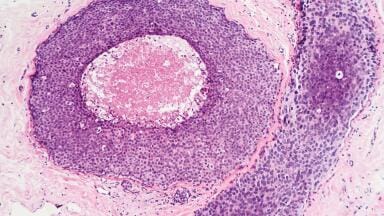
Bioholo-tomography (BHT) could help to stop the spread of cancer by enabling doctors to catch the disease in the early stages, according to one organisation.
Market analyst Frost & Sullivan noted the prevalence of BHT is on the rise, with the technique allowing specific targeted high-resolution imagery of potentially affected parts of the body.
The method does not require any exposure to ionising radiation and is used in a device called the Cancer Instant Detector (CID).
Frost & Sullivan's Prasanna Vadhana Kannan said: "The CID incorporates a simplified and portable device that can rapidly capture diagnostic-quality information capable of revealing ... physiological anomalies."
According to the firm, the imaging has shown "significant degrees of reliability" in both everyday usage and clinical trials.
It follows news that laboratory scientists at Vanderbilt University are currently looking at ways of introducing imaging agents into pre-malignant tumours that will cause them to glow as the disease progresses.




 Product directory