Laboratory products
Published over 4 years ago. See the latest and most current information on Laboratory products.
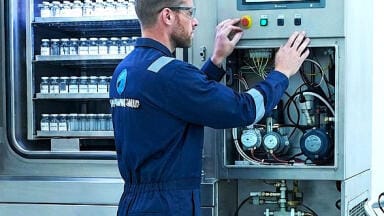
Freeze drying, also known as lyophilisation, is widely used across the pharmaceuticals industry. The process exposes products or specimens to temperatures below freezing, then uses a high-pressure vacuum to extract water and transform it into vapour. A condenser is used to collect vapour, where it’s converted into ice crystals and removed. After the initial freeze drying stage, the product or specimen is exposed to a gradual temperature increase to extract any 'bound' moisture.
Unlike heat-based drying methods, freeze drying uses low temperatures and processes called sublimation and desorption to extract moisture. This doesn’t affect chemical or physical properties and preserves biological activity. For the pharmaceuticals industry, where many products and specimens are delicate, unstable and heat-sensitive, this preservation technique is ideal.
After a product has been freeze dried it’s suitable for storage and transport at room temperature for long periods of time. Adding water is all that’s needed to reconstitute the product. The capacity to stabilise products and increase the shelf life of drugs and medications makes freeze drying one of the most widely used techniques in the pharmaceutical industry.
Below, we take a look at some of the most common examples of freeze drying in the pharmaceuticals sector.
Antibiotics are often highly sensitive to heat and other environmental factors. Freeze drying is used to stabilise antibiotics without compromising their physical structure or effectiveness.
Vaccines are often developed in manufactured in laboratories, then shipped around the world. Freeze drying simplifies the storage and transportation process and has a direct impact on public health across the globe. Scientists have already successfully used the technique on liposome-based liquid vaccines and are now exploring ways to freeze dry mRNA-based COVID-19 vaccines.
“Our goal is to develop a freeze drying process that can be used for mRNA-based COVID-19 vaccines to make them more stable and extend their shelf life, as well as make them easier to transport, store and use,” says Professor Seongkyu Yoon, a Chemical Engineering Professor at the University of Massachusetts Lowell.
Freeze drying is used to remove water from blood plasma and preserve the stability of clotting proteins. Samples can then be stored at room temperature for storage and transport, then rehydrated before transfusion.
High temperatures can destroy proteins and as a result, makes heat-based drying unsuitable for many pharmaceutical products.
While fridges, freezers and dry ice chambers can be an effective way to store and transport pharmaceutical products, freeze drying offers several key advantages:
Find out more about the complex field of transporting scientific specimens and products from A to B in ‘Sample Transportation in Laboratory Explained.’
ILM 51.6 Sept 2026



 Product directory


.jpg)










.jpg)