Inspiration drawn from moths could allow
lab products such as microscopes to be developed that are impervious to glare when used in bright ambient light conditions.
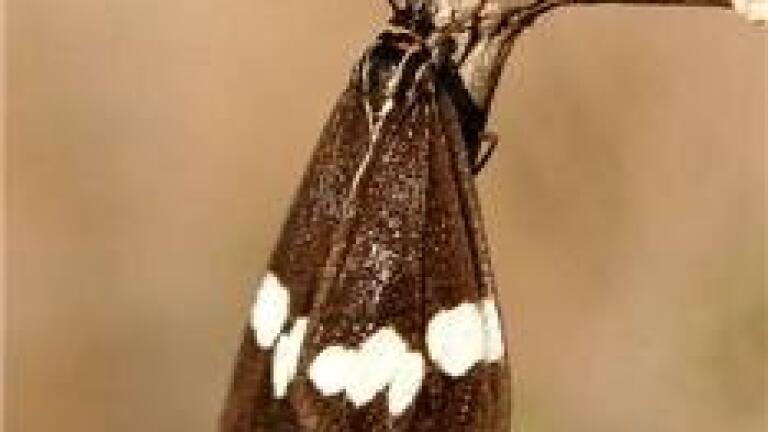
Scientists at the Fraunhofer Institute for Mechanics of Materials IWM in Freiburg have been looking at moths and, in particular, at how they hide from predators at night.
The nocturnal creatures must not reflect any light, as the slightest glimmer of a reflection could give away their location to predators.
Moths' eyes in particular could hold the answer to developing the anti-glare
lab products of the future.
They are covered in tiny protuberances, each of which measures less than the wavelength of a beam of visible light.
While letting light in so that the moth can see, the pattern breaks up light waves so that nothing is reflected - perfectly so, according to the scientists.
Replicating that pattern on reflective surfaces on instrumentation is hoped to reduce glare and reflections, allowing
lab products to become similarly perfect in their handling of light.
The institute is part of Fraunhofer-Gesellschaft, an organisation that exists to find answers to technical problems in a timely and cost-efficient manner.



 Product directory