Laboratory products
Published over 8 years ago. See the latest and most current information on Laboratory products.
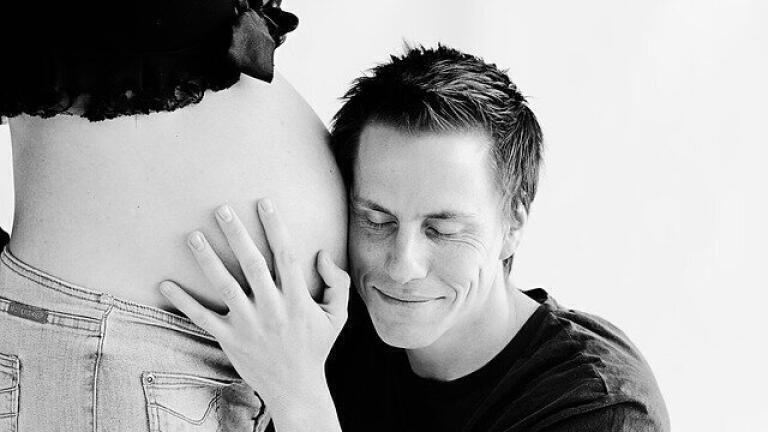
Babies are generally in the womb for over 40 weeks, so it makes sense that they want to stretch their legs every now and then. For mums to be the sensation of a tiny human being kicking about inside the body can feel a little surreal. So why do babies often seem like they're trying to practice their own miniature version of taekwondo?
According to experts, babies start to bend their heads and necks at around the 10-week mark. This is quickly followed by breathing, limb movements and full-body "wiggles". While these early movements are virtually undetectable up until the first 15 weeks, babies will usually make themselves known by week 16, or in some cases as late as week 25.
New MRI technology offers "behind the scenes" glimpse
While these flutters may feel and look novel, the latest research suggests that the movements play an important role in sculpting muscles, bones and joints. Now, new MRI technology has allowed scientists to record and analyse the biomechanics of foetal kicks throughout the entire span of a pregnancy.
“It’s extremely difficult to investigate foetal movements in detail in humans,” explains Stefaan Verbruggen, a bioengineer at Columbia University in New York.
The results of the new study were published in the Journal of the Royal Society Interface and offer the clearest glimpse yet at foetal kicks and patterns. Together with his colleagues, Verbruggen analysed videos of foetal kicks captured on MRI scans. One of the immediate findings was clear leg kicks 20, 25, 30 and 35 weeks gestation. Additional MRI scans offered in-depth anatomical data about bones, joints and leg sizes.
A greater purpose for "mechanical forces in utero"
Armed with advanced math and computational models, the researchers were able to estimate the strengths of the foetal kicks, as well as the mechanical strain that they put on the bones and joints. They noted that strain increases exponentially over the term of a pregnancy, which could play an important role in helping foetuses develop joints.
They also muse that the mechanical effects of movement could help to stimulate bone growth, a theory that supports other research suggesting that stationary mouse foetuses develop abnormal bones and joints.
Verbruggen even goes as far as proposing that these "mechanical forces in utero" could have lifelong repercussions. In other words, "how you move in the womb before you’re even born can affect your health much later in life.”
Next generation technology is a key component of medical advances. For a closer look at the latest instrument from Fritsch GmbH don't miss 'Fast Analysis of Particle Shape and Size with Dynamic Image Analysis'.
ILM 51.6 Sept 2026




 Product directory