Laboratory products
Published over 16 years ago. See the latest and most current information on Laboratory products.
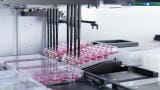
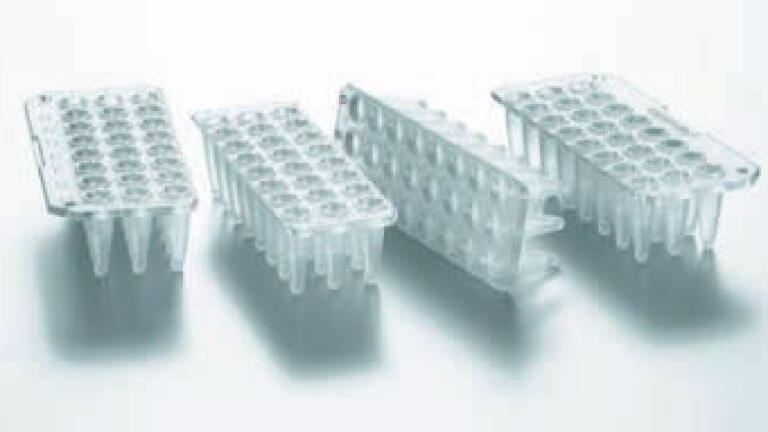
Eppendorf AG offers the first two-component PCR plate designed to be easily divisible, saving material and money when running smaller-scale experiments. These twin.tec unskirted 96-well plates fit almost all available PCR instruments and can be snapped into four separate 24-well segments and the empty wells saved for future use. According to Dr Kay Körner, Senior Product Manager PCR at Eppendorf AG: “Most of the time our customers do not fill up an entire 96-well PCR plate, and leaving the remaining wells empty is a waste of material and money. However, cutting PCR plates into pieces with scissors seemed to us an inappropriate solution, so we invented the first divisible two-component PCR plate. These new 96-well twin.tec plates can simply be snapped into pre-defined segments so that 24, 48 or 72 wells can be used as required – reducing waste and bringing significant cost savings.”
Eppendorf twin.tec PCR plates bring all the advantages that come from combining two materials. The frame is manufactured from rigid polycarbonate for enhanced mechanical stability, while the flexible polypropylene wells are thin-walled to ensure a snug fit to the thermal block for optimal heat transfer. The inert surface of the wells prevents DNA, RNA and enzymes from binding and improves recovery when working with small volumes.
ILM 51.6 Sept 2026


 Product directory