Laboratory products
Published over 17 years ago. See the latest and most current information on Laboratory products.
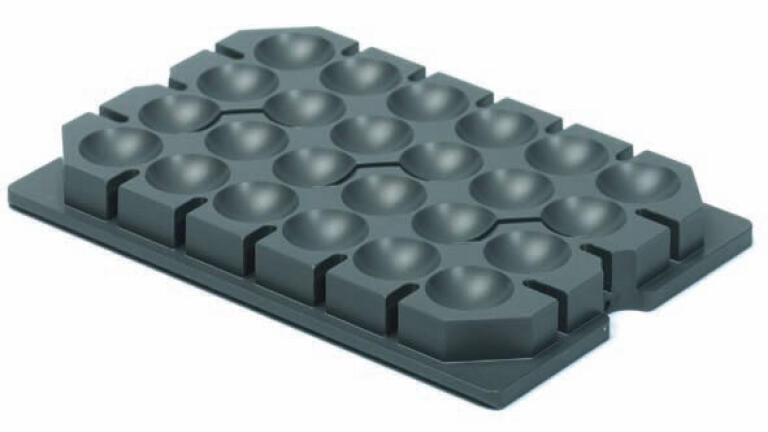
Genevac has reported on the significant operational benefits of using heat transfer plates in conjunction with a centrifugal evaporator for removal of DMSO or water from microplate samples.
By specifying an evaporator such as the Genevac HT4X or EZ-2 with high power lamps, the overall drying times for aqueous or DMSO sample solutions can be cut to just one fifth of that required without heat transfer plates. Consequently more microplates can be safely dried leading to higher throughput, a key goal for busy laboratories.
Traditionally removing solvents such as DMSO or water from microplates has been time consuming because of the poor thermal contact of the microplate with the evaporator sample holder. However, Genevac heat transfer plates overcome this problem acting as a snugly fitting insert beneath the microplate facilitating efficient thermal energy transfer from the hot outer surface of the sample holder directly to the walls of the microplate. This tight fit ensures maximum heat transfer into the samples resulting in very rapid evaporation rates without the risk of overheating fast drying samples.
Genevac provides optimised heat transfer plates for most popular brands of microplates.
ILM 51.6 Sept 2026



 Product directory