Mass spectrometry & spectroscopy
As carbon capture research moves from laboratory studies towards pilot-scale and industrial process development, reliable real-time gas analysis has become increasingly important for understanding CO₂ behaviour, monitoring process gases and optimising experimental conditions. Across carbon capture, hydrogen production, catalysis and thermal analysis, the ability to analyse gases and vapours with high sensitivity, selectivity and fast response gives researchers insight into reaction pathways, material performance, emissions and product formation.
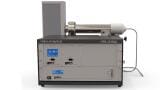
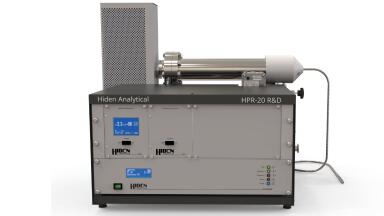
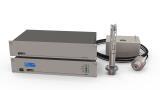
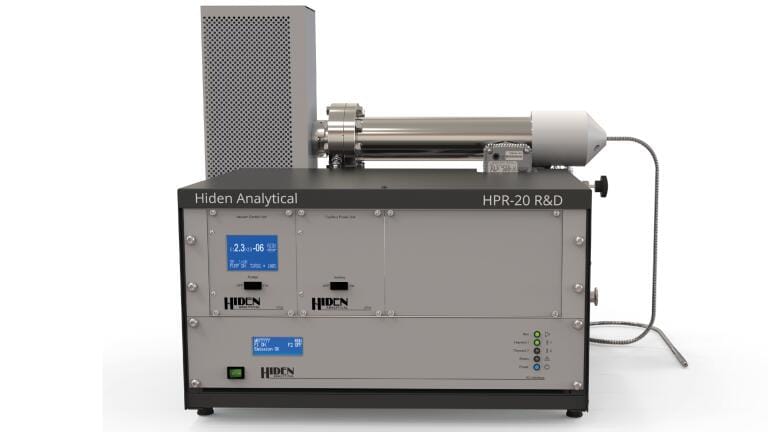
Hiden Analytical’s HPR-20 R&D, the company’s flagship gas analysis system, has been developed for these demanding research environments. The bench-top mass spectrometer supports real-time analysis of evolved gases and vapours for applications requiring high sensitivity, selectivity and fast response.
The system is built around a triple filter mass spectrometer, which provides improved resolution and enhanced abundance sensitivity, with detection to 5 ppb, subject to spectral interference. Four mass range options – 200, 300, 500 or 1000 amu – allow the instrument to be configured for a wide range of gas and vapour analysis requirements. An APSI-MS soft ionisation mode is also available, for applications where reduced fragmentation can support clearer interpretation of selected species.
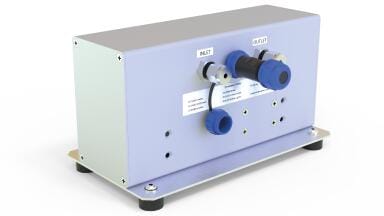
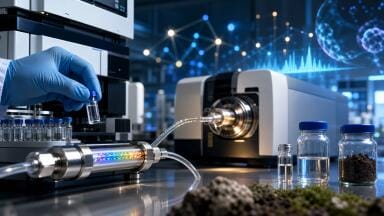
For continuous gas and vapour sampling, the HPR-20 R&D uses Hiden’s heated Quartz Inert Capillary (QIC). The system can be configured with a range of interfaces for connection to thermal equipment and other research set-ups, while sample flow can be tailored by inlet selection – from less than 1 ml/min to more than 20 ml/min – to match the demands of a given experimental configuration.
The HPR-20 R&D is used across a broad range of application areas, including carbon capture, green hydrogen, biogas, catalysis, thermal analysis (TA/MS), fuel cells, environmental monitoring, glovebox monitoring, gas separation studies, CVD, MOCVD and ALCVD, mud logging, and near-atmospheric XPS/APXPS. Its flexibility also extends to advanced research involving custom reactors, thermal systems and evolving process conditions, where real-time gas-phase data is required.
In carbon capture studies specifically, the system can support CO₂ adsorption and desorption testing, sorbent regeneration analysis, breakthrough curve monitoring, evolved gas analysis, chemical looping research and simulated flue gas experiments. By tracking CO₂ and related process gases, researchers can gain a clearer picture of capture performance, regeneration behaviour, process stability and potential by-products.
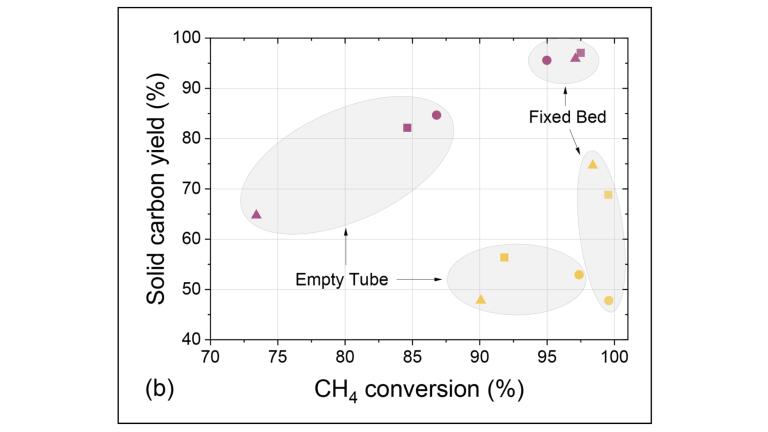
Published research illustrates how HPR-20 gas analysis has been applied in carbon capture-related work. In biogas pyrolysis research, HPR-20 instrumentation was used to monitor product gases and evaluate methane conversion, hydrogen yield, product composition and carbon capture potential. [1] In sustainable materials research, the system supported studies into PHB hydrolysis and depolymerisation kinetics, where gas-phase mass spectrometry helped substantiate kinetic models for biopolymer hydrolysis. [2] The HPR-20 R&D has also featured in electrochemical and catalytic studies, including photo-assisted electrocatalytic conversion of nitrate to ammonia and carbon dioxide reduction to syngas, where gas analysis helped correlate reaction conditions, catalyst performance and gaseous product formation. [3,4]
“Carbon capture research depends on more than measuring CO₂ alone. Researchers need to understand how gases behave across adsorption, reaction, regeneration and process cycling. The HPR-20 R&D gives advanced R&D teams the sensitivity, fast response and flexible sampling needed to monitor complex gas and vapour environments in real time,” said David Lundie, Technical Director at Hiden Analytical.
By combining high-sensitivity mass spectrometry with flexible sampling and application-specific configuration options, the HPR-20 R&D gives researchers a platform for real-time, multi-species gas and vapour analysis.
Further information on the HPR-20 R&D is available at https://www.hidenanalytical.com/products/gas-analysis/hpr-20-rd/.
References
ILM 51.6 Sept 2026

 Product directory