Laboratory products
Published over 17 years ago. See the latest and most current information on Laboratory products.
Due to their importance as macronutrients, the determination of carbohydrates or saccharides is of great interest in food analysis. Metrohm has developed a straightforward ion chromatographic method using isocratic elution and pulsed amperometric detection (PAD) to sensitively determine water-soluble polyols and sugar alcohols as well as mono-, di- and oligosaccharides in essential and non-essential foodstuffs.
In strongly alkaline mobile phases, sugar anions are separated on a positively charged strong anionexchange resin. Subtle differences in the pKa values of the carbohydrate hydroxyl groups allow efficient separation of low-molecular saccharides. However, sensitive and straightforward detection of the separated carbohydrates has long been a challenge. Ultraviolet and fluorescence detectors cannot be used due to the lack of chromatophores and fluorophores, and refractive index detection suffers from poor sensitivity and the fact that gradient elution is not applicable.
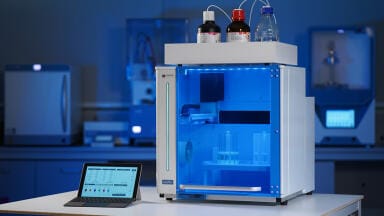
Since carbohydrates are electrochemically active, amperometric detection can be used to overcome these problems. A triple-step potential waveform referred to as pulsed amperometric detection (PAD) is applied. Initially a positive potential (E1) is applied to determine the target analytes, followed by the application of a second, more positive potential (E2) for oxidative removal of any reaction products from the electrode surface. The third, negative potential (E3) is applied to reduce any surface oxides on the electrode surface. The entire threestage process typically lasts one second and is repeated once per second to prevent electrode fouling. Apart from carbohydrates, PAD can be used for determining amino sugars, amino acids, biogenic amines, sulfur-containing species, alcohols and some antibiotics. The instrument of choice for these applications is Metrohm’s sugar analyser, the 871 Advanced Bioscan.
ILM 51.6 Sept 2026



 Product directory