Laboratory products
Published over 7 years ago. See the latest and most current information on Laboratory products.
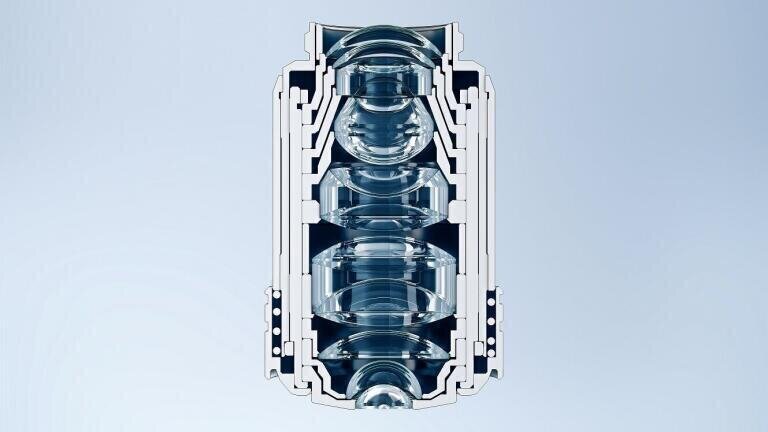
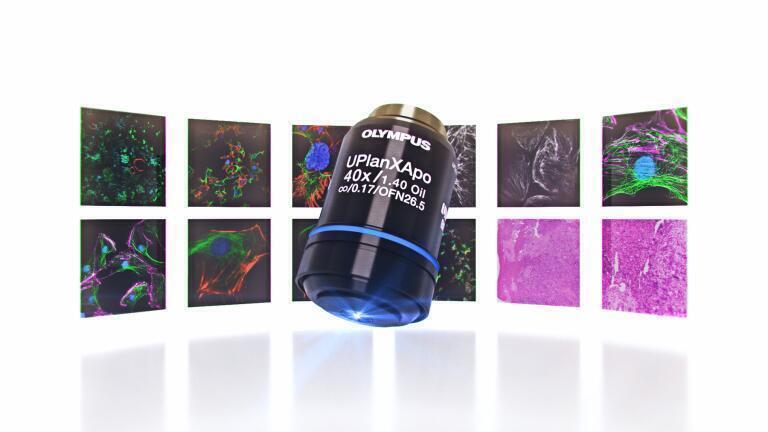
As one of the leading optical manufacturers for 100 years, Olympus has broken down the barriers to image quality with the introduction of its next-generation objectives. The breakthrough polishing technology enables the company to produce ultra-thin lenses that overcome the traditional compromise between numerical aperture (NA), flatness and chromatic correction - all three parameters can be significantly improved. Olympus has used this proprietary technology to deliver powerful X Line objectives for clinical and research applications and UPLAPO HR lenses, the world's first plane-corrected Apochromatic lenses with a NA of 1.5 for Total Internal Reflection Fluorescence (TIRF) microscopy and super resolution applications. The new objectives will significantly improve a wide range of research and clinical applications without the need to change or update imaging systems.
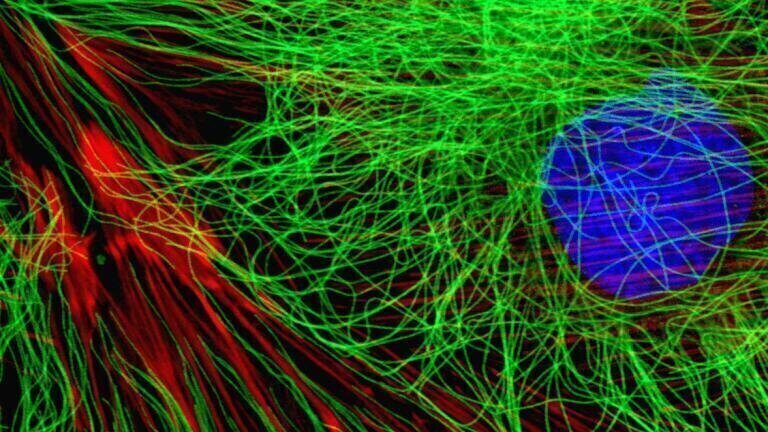
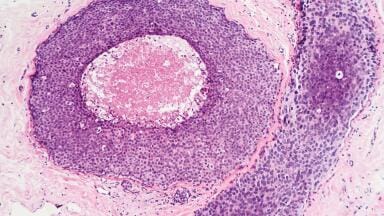
Conventional lenses force manufacturers to optimise either the image area or chromatic aberration or the NA, which contributes to bright and high-resolution images. Olympus' X-Line objectives negate this compromise and deliver market-leading image quality where each of these three quality pillars is as solid as the others. The resulting high and uniform image quality across the entire field of view (FOV) benefits accurate diagnosis, large FOV imaging, multicolor imaging, image stitching and quantitative image analysis.
We want to get you excited about our next webinar. And we hope this detailed description of the benefits of the revolutionary X Line objectives series will spark your interest. The topics in the webinar will be:
July 16th at 5PM CEST and will be hosted by Associate Product Manager Dr. Alket Mertiri.
You can register now.
The webinar will be available on-demand after the 16th of July.
We look forward to seeing you at the webinar.
Many applications benefit from high-quality images with a large field of view, but there is usually a compromise where improvements in one area of imaging, lead to a reduction in another area.
With the new X Line lenses, you don't have to compromise any more.
ILM 51.6 Sept 2026



 Product directory


.jpg)
.jpg)










.jpg)
.jpg)
.jpg)









.jpg)
