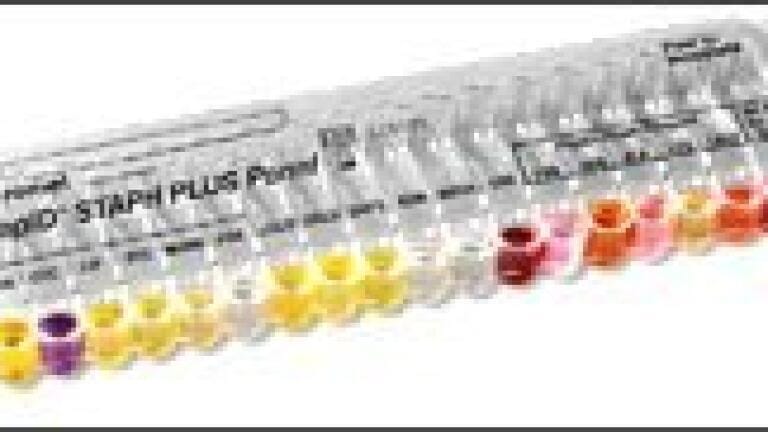
Oxoid is pleased to announce the launch of the Remel RapIDâ„¢ STAPH for the biochemical identification of Staphylococcus species and related organisms isolated from human clinical specimens. This rapid and convenient manual identification system offers clinical laboratories of any size a valuable new diagnostic tool for an important group of opportunistic pathogens, with results in only 4 hours.
The RapID STAPH PLUS panel incorporates a series of 18 carefully selected biochemical tests directed towards this group of organisms. The novel, one-step, inoculation method allows all of the test wells
to be inoculated simultaneously, saving time and simplifying the procedure. The panel is then incubated aerobically for just 4 hours.
The clearly visible colour reactions are easy to read and are used to identify the test organism. Each of the tests in the panel is interpreted using the RapID STAPH PLUS Colour Guide, which aids in the
generation of a numerical microcode. The microcode is entered into the Windows®-based ERIC™ (Electronic RapID Compendium) software for organism identification.
This user-friendly package contains a comprehensive database of 40 medically important Staphylococcus species and related organisms, and ranks identifications by probability (greater than 95% probability is required for species level identification), ensuring excellent accuracy and reliability.
RapID STAPH PLUS can be used to identify Staphylococcus aureus and over 30 species of coagulase negative staphylococci (CNS) in addition to other related organisms. CNS are an increasingly important cause of hospital acquired infections. They are the most common causal agents of
bacteraemia in patients with indwelling medical devices and are one of the most prevalent causes of blood stream infections in paediatric patients.
With up to 80% of hospital-acquired CNS infections being methicillin resistant, and many species being multiple-resistant to antimicrobials,
a rapid and accurate identification is important to help direct
appropriate antibiotic therapy.




 Product directory