Laboratory products
Published over 11 years ago. See the latest and most current information on Laboratory products.
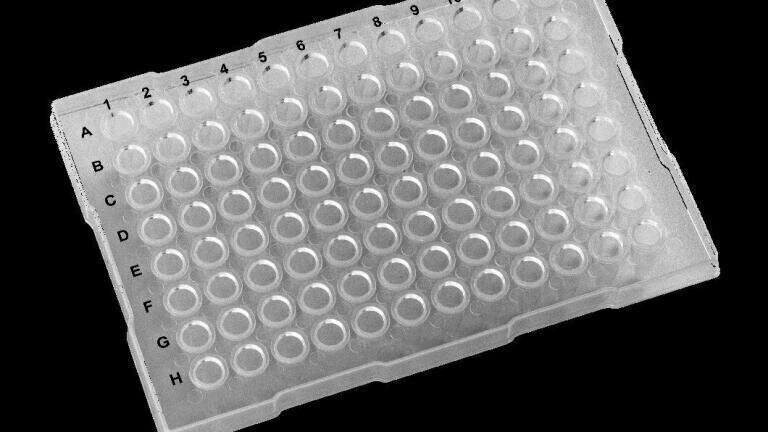
To ensure full compatibility with robotic systems, DNase / RNase- and pyrogen-free PCR plates from Porvair Sciences feature high rigidity to minimise distortion before and after thermal cycling.
Produced in Class 10,000 clean room conditions, the Porvair range of PCR plates are certified free of pyrogens as well as DNAse and RNAse enzyme activity enabling routine achievement of excellent PCR results. Porvair PCR plates are based upon a well design where the liquid meniscus comes below the plate surface eliminating sample carryover problems when using a plate lid.
Summarised in an easy-to-use selection guide (pages 14-15 of 2015 catalogue) the Porvair PCR plate range of standard or low profile 96-well PCR plates are available in specific optimised formats (full, half or no skirt), with well volumes of 100-200 microlitres. Designed for higher throughput assays, where samples are often at a premium, Porvair 384-well PCR plates offer a working well volume of only 30 microlitres. To ensure full compatibility with robotic systems the 384-well PCR plates offer a full plate skirt and high rigidity to minimise distortion before and after thermal cycling. Black alphanumeric printing on all PCR plates ensures easy well identification.
Available in bulk packs of 50 individually wrapped plates, Porvair Sciences 96-well and 384-well PCR plates reduce the cost of Polymerase Chain Reaction (PCR) analysis without compromising performance.
ILM 51.6 Sept 2026




 Product directory