

Laboratory products
The USP, NIST, and five leading biotech companies participated in a study to compare commonly used techniques to determine the full-to-total (FFT) ratio. They discovered problematic variability with the widely used PCR-ELISA method and found that some techniques performed better in repeatability across different labs.
Recombinant adeno-associated viruses (AAVs) are the most well-studied viral vectors for gene therapy, but the field is still relatively new. Despite five FDA-approved AAV-based therapies and hundreds of ongoing clinical trials, the standard methods for analyzing the quality of AAV particles are still under development.
During testing, it was revealed that PCR-ELISA showed poor reproducibility. Between the different labs, results could vary by more than 75%, making results unlikely to be replicated reliably between labs. This is concerning as PCR-ELISA is widely used for AAVs titer measurement.
AUC (Analytical Ultracentrifugation), a highly regarded method for detecting partially filled particles, demonstrated good repeatability within individual labs. However, the complexity of analyzing mixed samples made it harder to reproduce results consistently between labs, resulting in approximately 25% standard deviation across sites.
The most consistent method tested was size exclusion chromatography with multi-angle light scattering (SEC-MALS) combined with UV/Vis and refractive index detection. SEC-MALS showed the best agreement between laboratories, with less than 10% variability—significantly better than AUC and PCR-ELISA. In addition, SEC-MALS also has the added benefit of providing information on size and aggregation within the same run, something that a plain UV/Vis measurement is unable to provide. Researchers suggest that, “SEC-MALS could be implemented as a general method, with [SV-AUC] being used for more complete analysis as necessary.”
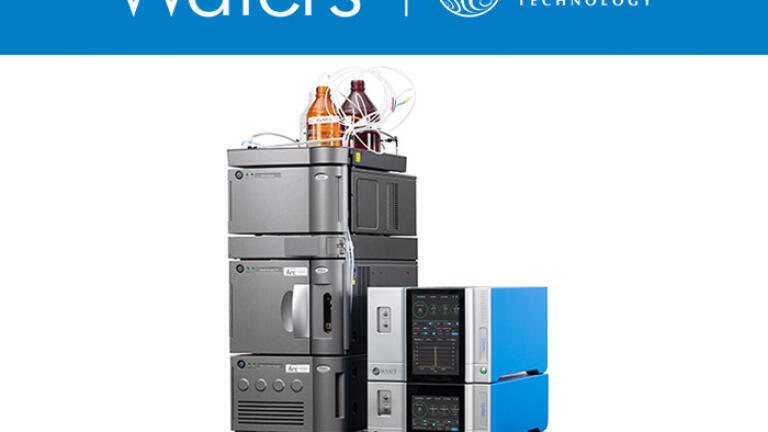
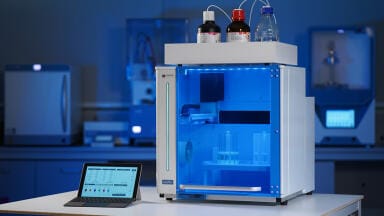
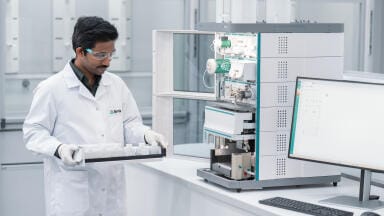
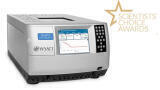
Wyatt's SEC-MALS solution provides the most reliable method for measuring the full-to-total ratio of AAV particles:
ILM 51.6 Sept 2026



 Product directory















.jpg)
