Research news
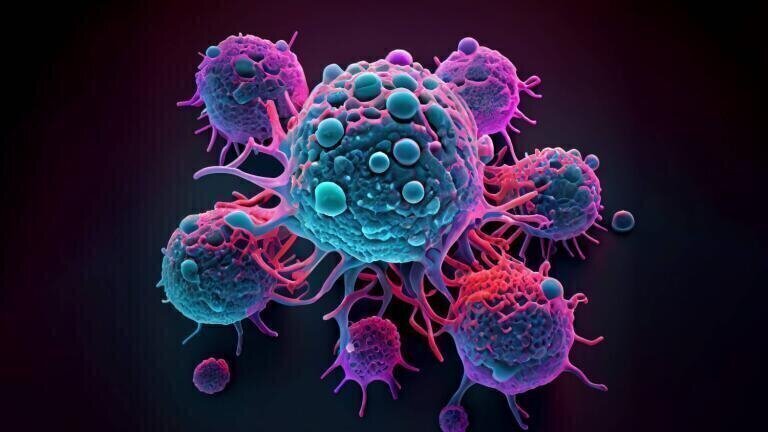
BioMed X, an independent biomedical research institute, announces the successful completion of its extrachromosomal DNA (ecDNA) in cancer research project, conducted in partnership with Merck. This project has yielded critical insights into the mechanisms governing ecDNA formation, propagation, and maintenance, providing a foundation for future therapeutic innovations in precision oncology.
Launched in August 2022, this initiative sought to elucidate the role of ecDNA in cancer cells by using cutting-edge single-cell screening and spatial analytical technologies. The research, led by Dr Alexandros Drainas - winner of the BioMed X Innovation Boot Camp - was guided by academic mentorship from Dr Sebastian M. Waszak, Assistant Professor at EPFL, Lausanne, Switzerland, alongside industry expertise from Dr. Balca Mardin, Head of Target Discovery & Research at Merck.
The BioMed X team undertook a systematic investigation into the biology of ecDNA, addressing fundamental questions such as:
The study’s findings provided compelling evidence of gene candidates that modulate ecDNA abundance, shedding light on novel regulatory pathways that may be used for therapeutic intervention. In addition, the research team pioneered advanced spatial techniques to examine the impact of ecDNA localisation on cancer cell plasticity and adaptability, offering deeper insights into its role in driving tumour heterogeneity and therapeutic resistance.
The successful completion of this project ahead of schedule was driven by a series of unexpected yet promising discoveries. These findings lay the groundwork for innovative approaches aimed at mitigating cancer heterogeneity - one of the primary obstacles to effective treatment. By addressing the mechanisms underlying ecDNA-driven resistance, this research holds the potential to enhance the efficacy of existing oncological therapies.
Dr Thomas Rückle, Senior Vice President of Research at BioMed X, emphasised the significance of this collaboration: “This partnership with Merck exemplifies the transformative power of combining academic innovation with industrial expertise. The insights gained from this study not only advance our understanding of cancer biology but also pave the way for the development of ecDNA-targeted treatment strategies. We look forward to further collaborative efforts aimed at unravelling the complexities of oncogenic ecDNA.”
As the project concludes, the data generated has been acquired by Merck for further development, underscoring the translational potential of these findings in shaping next-generation cancer therapies.
More information online
ILM 51.6 Sept 2026





 Product directory




















,-photo-Karin-Allander.jpg)






.jpg)