Research news
Researchers at the University of Southern California (USC) Norris Comprehensive Cancer Center, Los Angeles, California, have uncovered how the most common cancer-causing strain of human papillomavirus – HPV16 – manipulates the immune system to support tumour growth. The findings provide an insight into why therapeutic vaccines for HPV have so far shown limited success and suggest a route to more effective treatment.
HPV16 is responsible for more than half of cervical cancer cases and around 90 per cent of HPV-linked throat cancers. It can be prevented with the vaccine Gardasil-9, but protection is effective only if vaccination takes place before exposure to the virus. Researchers have been working to create therapeutic vaccines which can be given after infection by HPV, for example following an abnormal smear test or a cancer diagnosis, I order to prompt the body’s T-cells to attack infected cells. These vaccines – now in clinical trials – have had limited effectiveness but the USC study helps to explain why.
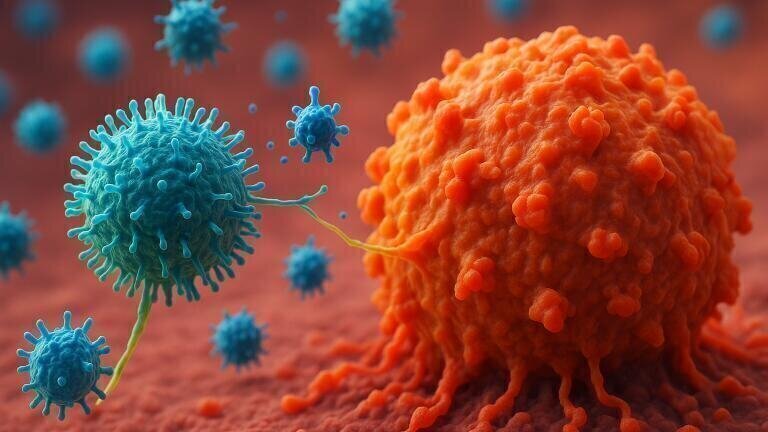
The team has found that HPV proteins known as E6 and E7 cause surrounding cells to release interleukin-23 (IL-23), an inflammatory signalling protein in the immune system. This response prevents T-cells from multiplying and attacking the tumour.
“In order to eliminate the cancer, T-cells need to proliferate and destroy infected cells. But IL-23 stops them from working effectively, so the tumour keeps growing,” said Professor W Martin Kast, Walter A Richter Cancer Research Chair at the Keck School of Medicine of USC and senior author on the study.
By blocking IL-23, the researchers increased the effectiveness of therapeutic vaccines, as this allowed T-cells to carry out their normal role of finding and killing cancer cells. Antibodies that inhibit IL-23 are already approved by the United States Food and Drug Administration (FDA) for psoriasis and other conditions, offering what the researchers described as a potential fast track to clinical use in cancer when combined with HPV vaccines.
“The fact that these antibodies are already FDA-approved for something else makes this approach promising, and it also allows for rapid translation into the clinic,” said Professor Kast, who co-leads the Tumour Microenvironment Program at USC Norris.
The team demonstrated the mechanism in mice by implanting HPV16 tumours, then administering a therapeutic vaccine to stimulate T-cell production. When IL-23 was present, the T-cells lost their ability to proliferate and kill cancerous cells. Administering antibodies to block IL-23 increased the number of tumour-targeting T-cells and, when combined with the therapeutic vaccine, triggered a stronger immune response that extended survival compared with either treatment on its own.
The group also used genomic analyses to determine how HPV’s E6 and E7 proteins drive IL-23 production. Understanding this mechanism is an important step towards improving therapies for HPV-related cancers, Professor Kast said.
“Therapeutic vaccines do prompt the immune system to create HPV-specific T-cells, but they don’t work well – and now we have an idea why,” he said.
The research, supported in part by the United States National Institutes of Health, may also have wider implications. IL-23 is found at high levels in other cancers, including testicular and bladder cancer. Further work is needed to determine whether similar strategies could benefit patients with these diseases.
For further reading please visit: 10.1136/jitc-2025-011915
ILM 51.6 Sept 2026



 Product directory





















,-photo-Karin-Allander.jpg)






.jpg)
