
Research news
Study reveals how domesticated virus-like particles enable bacteria to share DNA, with implications for antimicrobial resistance transmission
Recent research has provided important insight into the mechanisms that allow bacteria to exchange genetic material – including genes that have been associated with antimicrobial resistance (AMR) – which remains a major and growing global health threat. The findings have expanded current understanding of how bacterial populations acquire and disseminate traits that can undermine the efficacy of antibiotic treatments.
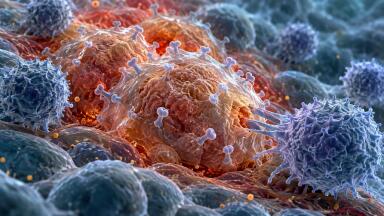
The work, conducted by researchers at the John Innes Centre, Norwich, Norfolk, UK, in collaboration with the University of York, UK and the Rowland Institute at Harvard, Cambridge, Massachusetts, USA, has focused on gene transfer agents, a class of virus-like particles that facilitate horizontal gene transfer between bacterial cells. These particles resemble bacteriophages – viruses that infect bacteria – yet they have been evolutionarily repurposed and are now under the control of their bacterial hosts.
Gene transfer agents act as molecular couriers. They package fragments of host bacterial DNA and deliver them to neighbouring cells, enabling the exchange of genetic information within microbial communities. This process, termed horizontal gene transfer, can accelerate the dissemination of advantageous traits, including those that confer resistance to antibiotics. Such transfer represents a key route through which AMR can spread rapidly across bacterial populations.
A critical stage in the lifecycle of gene transfer agents is host cell lysis, in which the bacterial cell membrane ruptures to release DNA-containing particles. Until now, the molecular mechanisms that govern this release have remained poorly understood. In the present study the research team has used a deep sequencing-based screening approach to identify genes essential for gene transfer agent function in the model bacterium Caulobacter crescentus.
This approach has identified a three-gene regulatory module, designated LypABC, which encodes bacterial proteins that control the lysis process. Experimental deletion of the lypABC genes prevented bacterial cells from undergoing lysis, thereby blocking the release of gene transfer agents. Conversely, overexpression of this gene cluster resulted in a substantial increase in the proportion of cells that lysed, confirming that LypABC acts as a central control hub for gene transfer agent-mediated cell rupture.
The study has also revealed an unexpected feature of the LypABC system. Structural analysis has shown that the proteins encoded by this gene cluster contain domains typically associated with bacterial anti-phage defence systems. These domains are commonly involved in immune-like responses that protect bacteria from viral infection. However, in this context, the system appears to have been repurposed to serve a cooperative function, enabling the controlled release of gene transfer agents and facilitating DNA exchange between cells.
In addition to the LypABC hub, the researchers have identified a regulatory protein that ensures tight control of both gene transfer agent activation and the lysis process. This regulatory mechanism appears to be essential for cellular viability, as misregulation of LypABC activity has proved highly toxic to bacterial cells. Such findings highlight the finely balanced nature of this system, in which controlled self-destruction of individual cells supports the broader genetic adaptability of the population.
“What’s particularly interesting is that LypABC looks like an immune system, yet bacteria are using it to release gene transfer agent particles,” said Dr. Emma Banks, first author of the study and a Royal Commission for the Exhibition of 1851 research fellow.
“It suggests that immune systems can be repurposed to help bacteria share DNA with each other – a process that can contribute to the spread of AMR,” she added.
By elucidating the molecular basis of gene transfer agent-mediated lysis, the study has advanced fundamental understanding of how horizontal gene transfer operates in bacterial systems. These insights provide a clearer framework through which to interpret the dynamics of AMR dissemination and may inform future strategies to mitigate its spread.
The researchers have indicated that further work will seek to determine how the LypABC control hub is activated and to define the precise biochemical mechanisms through which it orchestrates cell rupture and particle release.
For further reading please visit: 10.1038/s41564-026-02316-4
ILM 51.6 Sept 2026


 Product directory


.jpg)
.jpg)














,-photo-Karin-Allander.jpg)








.jpg)
