
Research news
Synthetic TriPcide compounds have shown antibacterial activity against Staphylococcus aureus, antibiotic-resistant strains and dormant persister cells, in research that could support future treatment strategies for difficult infections
Researchers have reported that synthetic compounds known as TriPcides can target Staphylococcus aureus, which include the antibiotic-resistant strains called methicillin-resistant Staphylococcus aureus (MRSA). The compounds have disrupted the pathogen’s capacity to cause infection and have also killed dormant bacterial cells which have often proved difficult to treat with existing antibiotics.
“We have developed an entirely novel class of compounds with very promising antibacterial properties. What stands out is that the bacteria we have studied do not easily develop resistance to these synthetic antibiotics.
“We have also not observed any existing resistance in a wide range of clinical isolates, which is encouraging,” said Dr. Fredrik Almqvist, professor at the department of chemistry at Umeå University.
Antibiotic resistance has been recognised as a major and increasing global threat to public health. As bacteria acquire resistance to existing medicines, patients face a greater risk of infections that are harder to treat, longer hospital stays and higher mortality. The problem has created an urgent need for alternative therapeutic strategies, both to complement current antibiotics and to provide replacement options when standard treatments fail.
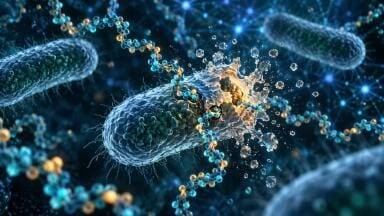
The TriPcide compounds acted by affecting bacterial cell membranes and by interfering with processes that the bacteria need to establish infection. In laboratory studies, the compounds showed activity against several Gram-positive bacteria which include resistant strains. Gram-positive bacteria have a distinctive cell wall structure and include a number of clinically important pathogens, among them S. aureus.
A key finding was that the compounds were also effective against persister cells. These are bacteria that enter a dormant state and can survive treatment because many antibiotics act most effectively against cells that are continuing to grow or divide. Persister cells lie dormant, not growing, and so can remain within the patient after treatment later risking infection relapse.
“Persister cells are bacteria that enter a state similar to dormancy, in which they do not divide and are metabolically inactive. A small fraction of the bacteria causing an infection are in this state and can therefore survive antibiotic treatment.
“Once treatment ends, they can resume growth and cause the infection to return. Our TriPcides also showed activity against persister cells, which is very exciting,” said Almqvist.
The discovery could contribute to future treatment approaches for severe bacterial infections, although further research will be required before the findings can move towards clinical use. The work remains at an early stage but the combination of activity against resistant strains and persister cells makes the compounds notable, because both features address major weaknesses in current antibacterial therapy.
The findings are also relevant to the wider strain on healthcare systems. More effective treatments for persistent or drug-resistant infection could reduce the need for prolonged care, repeat clinical interventions and extended hospital stays. That potential health-system benefit would be particularly important in cases where infection management already requires substantial clinical resources.
“This study is the first to investigate this novel type of antibiotic and offers hope that we can continue to develop effective treatments. There is a significant global need for novel … antibiotics to which bacteria have not already developed resistance, and this discovery is a positive step forward.
“We may be moving towards [an] … effective option for infectious diseases,” Almqvist concluded.
For further reading please visit: 10.1126/sciadv.aec9100
ILM 51.6 Sept 2026



 Product directory














,-photo-Karin-Allander.jpg)





.jpg)
