
Research news
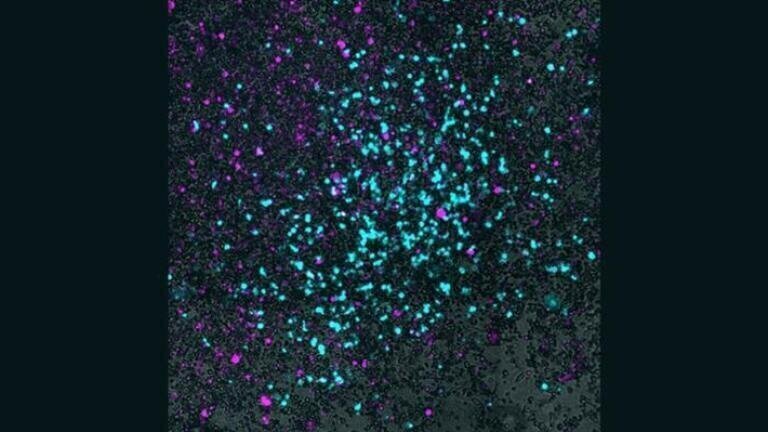
A team of researchers at the School of Engineering and Applied Science Columbia University, New York, has reported the development of a cancer therapy that combines both bacteria and viruses to attack cancerous tumours. The approach represents the first example of directly engineered cooperation between bacteria and cancer-targeting viruses.
The system, called CAPPSID – Coordinated Activity of Prokaryote and Picornavirus for Safe Intracellular Delivery – concealed an oncolytic virus inside the tumour-seeking bacterium Salmonella typhimurium. This method allowed the virus to bypass the immune system and to only become active once it was inside the cancer cells. The work was led by Dr. Tal Danino, associate professor of biomedical engineering at Columbia Engineering, in collaboration with virologist Dr Charles M Rice of The Rockefeller University, New York.
“We aimed to enhance bacterial cancer therapy by enabling the bacteria to deliver and activate a therapeutic virus directly inside tumour cells, while engineering safeguards to limit viral spread outside the tumour,” said Jonathan Pabón, a doctoral candidate at Columbia and co-lead author.
One of the principal obstacles in viral therapies has been the body’s own defences, which can often neutralise a therapeutic virus before it reaches its target. By enclosing the virus within a bacterium that naturally migrate to tumours, the Columbia team prevented it from being intercepted by circulating antibodies.
“The bacteria act as an invisibility cloak, hiding the viruses from circulating antibodies, and ferrying the viruses to where they are needed,” said co-lead author Dr Zakary S Singer, a former postdoctoral researcher in Danino’s laboratory.
The researchers programmed the bacteria to invade tumour cells, where they released the viral genome. This enabled the virus to replicate and spread between cancer cells. Crucially, the system incorporated a safeguard to restrict viral spread. The engineered virus required a protease provided only by the bacteria in order to mature. As the bacteria remained localised within tumours, the virus could not replicate in healthy tissue.
“Spreadable viral particles could only form in the vicinity of bacteria, which are needed to provide [a protease] essential for viral maturation,” said Singer.
Danino, who is also affiliated with the Herbert Irving Comprehensive Cancer Center and Columbia’s Data Science Institute, described the platform as: “probably our most technically advanced and novel platform to date.”
The technology has been validated in mouse models, and the team is now extending their investigations to a wider range of tumour types, viruses, and bacterial strains.
“As a physician-scientist, my goal is to bring living medicines into the clinic.
“Efforts toward clinical translation are currently underway to translate our technology out of the lab,” said Pabón.
A patent application has been filed by the team with the United States Patent and Trademark Office related to this work (WO2024254419A2).
For further reading please visit: 10.1038/s41551-025-01476-8
ILM 51.6 Sept 2026



 Product directory


















,-photo-Karin-Allander.jpg)





.jpg)
