Research news
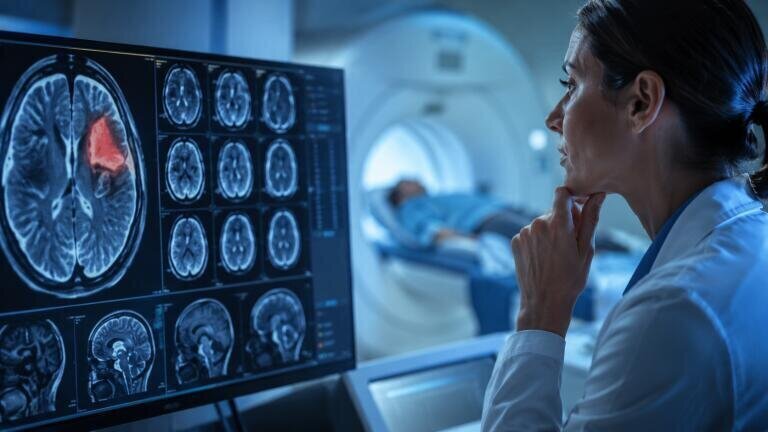
Researchers have reported that a brain imaging measure known as blood-brain barrier disruption could help clinicians to predict stroke outcomes, tailor clot-removal and drug treatment and support more targeted clinical trials
A research team has reported that a brain imaging approach known as blood-brain barrier imaging could help clinicians to refine the treatment of ischaemic stroke and identify patients at greater risk of poor recovery.
The study examined a concept described as blood-brain core imaging – or ‘leaky core’ –which allows researchers to assess disruption to the blood-brain barrier after stroke. The blood-brain barrier is the specialised vascular interface that helps to regulate which substances can pass from the bloodstream into brain tissue. When this barrier becomes disrupted, blood vessels in the brain may become more permeable and may begin to leak, a process thought to reflect underlying tissue injury, inflammation and a higher risk of bleeding.
“We are constantly advancing our stroke prevention strategies, our acute stroke treatments, our post-stroke management and our stroke rehabilitation options,” said Dr. Richard Leigh, a neurologist and director of the Johns Hopkins Neuro Vascular Brain Imaging Laboratory, Baltimore, Maryland, USA, and first author of the study.
“It is likely that imaging the blood-brain barrier, which is itself a marker of brain health, can help us improve all of these interventions,” he added.
The findings in the study suggest that this form of imaging could strengthen efforts to make stroke care more precise. In acute stroke, treatment time is critical because rapid restoration of blood flow to the brain can limit tissue damage and improve the chances of recovery. However, clinicians must also balance the potential benefit of intervention against the risk of complications, particularly haemorrhage after an ischaemic stroke. Ischaemic stroke accounts for most stroke cases and occurs when a blood vessel in the brain is blocked or narrowed.
The research team, which included scientists from France and Spain, as well as the USA, reviewed 291 post-stroke brain scans to examine areas affected by blood-brain barrier disruption. The work has shown that the extent of this disruption was associated with clinical outcome after ischaemic stroke. For every 1 per cent increase in blood-brain barrier disruption, the odds of a poor outcome three months after stroke increased by 16 per cent. Poor outcomes included an additional need for help with care, severe disability or death.
“The importance of the blood-brain barrier has been known but it is often overlooked because we didn’t have a good way to take pictures of it,” Leigh said.
“One of the reasons this research is taking off is because it uses information from a sequence that is already being collected as part of brain scans,” he added.
The imaging algorithm calculates information about vascular leakage in affected areas of the brain from existing magnetic resonance imaging (MRI) scans taken after a person has had a stroke. MRI already allows physicians to assess damaged brain regions and to develop treatment plans, including approaches that aim to preserve tissue that could be salvageable while reducing the risk of complications such as bleeding.
Leigh said that leaky core imaging could allow researchers and clinicians to obtain a more detailed view of affected brain regions and tailor treatment decisions more precisely.
“We want to be as accurate as we can to deliver the best care to patients. This imaging gives us another piece of data to assess what’s going on in the brain,” Leigh said.
The approach could influence decisions after thrombectomy, a procedure used to remove blood clots mechanically from the brain. A patient who shows evidence of blood vessel leakage may still be considered suitable for thrombectomy but a physician may decide not to use blood thinners or clot-dissolving medication afterward because of the risk of bleeding.
Conversely, leaky core imaging may identify patients who would not appear to be good candidates for treatment on conventional imaging but whose blood vessels in the affected area remain intact. Such patients could then become eligible for intervention that might otherwise not been considered appropriate.
This possibility is important because some patients who have historically gone untreated may still have brain tissue that could benefit from reperfusion, provided the vascular barrier remains sufficiently preserved. The imaging approach could therefore help to expand treatment to selected patients while supporting safer use of blood thinners and clot-dissolving drugs.
Leigh also said the technique may have value beyond immediate treatment decisions.
“Ultimately, the blood-brain barrier is a target,” Leigh said.
By allowing researchers to monitor how the blood-brain barrier responds to treatment, leaky core imaging could support the development of more targeted and efficient clinical trials. If investigators can identify treatments that preserve or restore the barrier, or determine which strategies fail to do so, they may be able to evaluate potential therapies faster and with fewer resources.
The researchers also suggested that blood-brain barrier imaging could help to monitor adults who have had a stroke and remain at increased risk of later complications, including a second stroke or dementia. Combined with ongoing work to identify additional markers of cognitive health, the technique could provide neurologists and care teams with earlier signals that intervention may be needed.
“Stroke can be a devastating disease – yet with advances in technology and precision medicine approaches, curing stroke is a possibility,” Leigh added.
For further reading please visit: 10.1161/STROKEAHA.126.055955
ILM 51.6 Sept 2026



 Product directory



















,-photo-Karin-Allander.jpg)








.jpg)
