Research news
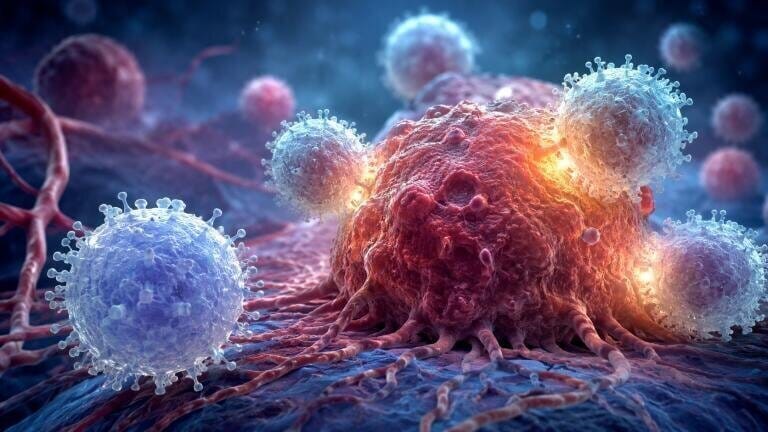
UCLA researchers have developed an engineered CAR T cell therapy that released immune-stimulating cytokines to strengthen anti-tumour activity against aggressive brain tumours in mouse models
Scientists at the University of California, Los Angeles (UCLA), Health Jonsson Comprehensive Cancer Center in Los Angeles, USA, have developed a novel cytokine-armoured chimeric antigen receptor T (CAR T) cell therapy that helped the immune system to attack aggressive brain tumours more effectively in mice while reducing the dangerous side effects that have limited immune-based approaches for glioblastoma, one of the most lethal and treatment-resistant forms of brain cancer.
The therapy reprogrammed CAR T cells, to release immune-stimulating proteins called interleukin-12 and decoy-resistant interleukin-18. These cytokines activated the body’s own immune system and strengthened the wider anti-cancer response beyond the direct action of the engineered cells. In mouse models, the approach improved tumour control, including against cancers made up of mixed cell populations that would be expected to escape a single-target therapy.
Researchers also found that to pair the treatment with a second CAR T strategy that targeted vascular endothelial growth factor helped to reduce side effects while it preserved strong anti-tumour activity. Vascular endothelial growth factor is a protein that drives abnormal blood vessel formation and contributes to swelling in glioblastoma, which can make treatment more difficult and increase the risk of complications.
The findings suggest a potential strategy for recurrent high-grade gliomas and other solid tumours that have historically proved difficult to treat with CAR T cell therapy.
Glioblastoma remains exceptionally hard to treat because the tumour suppresses immune responses, contains diverse cancer cell populations and creates abnormal blood vessels that can restrict the effectiveness of immunotherapy. Although CAR T cell therapy has transformed care for some blood cancers, its success in solid tumours has remained limited. One major difficulty is that solid tumours often contain cancer cells that do not all display the same molecular target, which allows some cells to survive and drive relapse.
“A key challenge in treating brain tumours, particularly glioblastoma, is that the tumour cells are often antigen heterogeneous, meaning they do not all express the same proteins that can be recognised by a given targeted therapy,” said Dr. Yvonne Chen, co-director of the Tumour Immunology and Immunotherapy Program at the UCLA Health Jonsson Comprehensive Cancer Center and senior author of the study.
“We hypothesised that effective immunotherapy against brain tumours would have to engage naturally occurring immune cells, which can recognise a wide variety of target antigens, in the fight against cancer,” she added.
Because brain tumours are often described as immunologically ‘cold’, meaning that they do not naturally provoke a strong immune response, the UCLA team designed so-called armoured CAR T cells to activate immunity within the tumour environment. The engineered cells were built to recognise interleukin-13 receptor alpha 2, a tumour antigen commonly found on glioblastoma cells, while also secreting immune-stimulating proteins that recruited and activated the body’s immune cells.
The researchers tested multiple combinations of these ‘armour’ molecules in immunocompetent mouse models of glioblastoma. They used direct comparisons to assess how each design affected tumour growth, immune-cell recruitment and anti-tumour activity. The CAR T cells were studied in several orthotopic glioma models, meaning that the tumours were placed in the brain rather than under the skin or at another artificial site. Some of the tumours were engineered to vary in antigen expression, to better reflect the cellular heterogeneity seen in human disease.
After these comparisons, the team identified a particularly potent pairing which was interleukin-12 alongside decoy-resistant interleukin-18 (DR-18) which was designed to retain immune-stimulating activity despite the presence of natural inhibitory mechanisms that can blunt the action of conventional interleukin-18.
“IL-12 and DR-18 work synergistically to activate the immune system, resulting in a dramatic influx of immune cells into the tumour-bearing brain,” said Chen, who is also a professor of microbiology, immunology, and molecular genetics at UCLA and a member of the UCLA Broad Stem Cell Research Center.
“The diverse immune-cell population recruited into the brain contributes to attacking the tumour, including ones that cannot be directly recognised by the CAR T cells themselves,” she said.
The treatment demonstrated the ability to eliminate tumours that contained cancer cells lacking the target recognised by the CAR T cells. That finding is important because glioblastoma can evolve under therapeutic pressure, allowing tumour cells without the target antigen to survive after treatment and re-establish disease. By recruiting the wider immune system, the cytokine-armoured approach appeared to extend the anti-tumour response beyond the subset of cells that the CAR T cells could directly recognise.
However, the potency of cytokine-based immunotherapy carries clear safety concerns. Interleukin-12, in particular, can trigger dangerous inflammation if immune activation is too strong or too widespread. To address this problem, the UCLA researchers explored ways to preserve anti-tumour efficacy while reducing toxicity.
They found that to add a second engineered CAR T approach targeting vascular endothelial growth factor helped to reduce treatment-related toxicity while maintaining strong tumour control in mice. This strategy appeared to counteract part of the abnormal vascular environment associated with glioblastoma and to improve the balance between safety and efficacy.
“When developing novel therapies, we always have to balance considerations for safety and efficacy,” Chen said.
“Potent cytokines such as IL-12 and DR-18 have toxicity potential, which is why we performed in-depth studies to understand the nature and severity of the toxicity and devised ways to counteract safety concerns while maintaining anti-tumour activity,” she added.
The findings suggest that cytokine-armoured CAR T cells could offer a route to treat recurrent high-grade gliomas, a setting in which available therapeutic options remain poor. The work is still preclinical, and results in mouse models do not guarantee benefit in patients. Even so, the study has provided evidence that a CAR T cell therapy can be designed not only to attack antigen-positive glioblastoma cells directly but also to mobilise broader immune activity against antigen-negative tumour cells that would otherwise escape.
“We are very encouraged by the ability of our cytokine-armoured CAR T cells to kill not only tumour cells that express IL-13Rα2, but also tumour cells that are not directly recognisable to the CAR T cells,” Chen said.
“We are excited to have developed a clinical protocol that would allow us to bring this therapy to the clinic while also providing a detailed toxicity management plan to ensure patient safety,” Chen concluded.
The researchers are completing the preclinical studies required to support clinical translation and are raising funds to launch a Phase 1 clinical trial in patients with recurrent high-grade glioma.
For further reading please visit: 10.1158/0008-5472.CAN-26-1515
ILM 51.6 Sept 2026



 Product directory




















,-photo-Karin-Allander.jpg)







.jpg)
