Research news
Researchers have shown how a tardigrade protein protects cell membranes and internal biological machinery, a finding that could support refrigeration-free transport of synthetic cells for medicine, biosensing and biotechnology
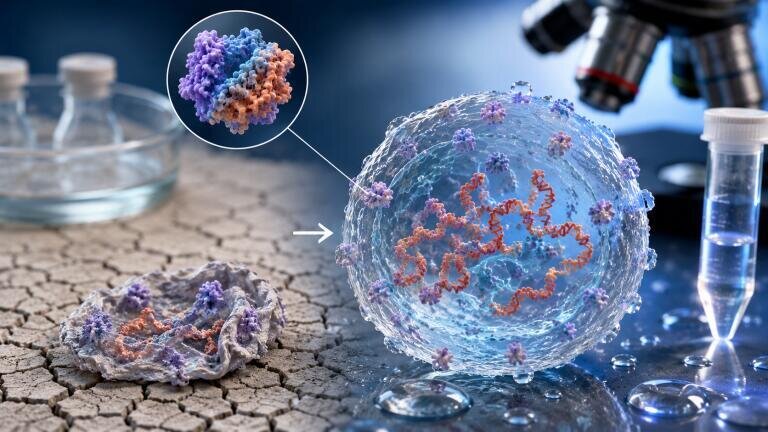
A protein found only in microscopic tardigrades has helped synthetic cells to survive dehydration – and then rehydration – in laboratory tests, a finding that could support more practical ways to store and transport biological ‘microfactories’ for medicine, diagnostics and environmental applications.
Researchers at University of Michigan Engineering, Ann Arbor, Michigan, USA and the University of Chicago’s Pritzker School of Molecular Engineering, Illinois, USA, have shown how cytoplasmic abundant heat-soluble protein 12 (CAHS12) protects cell membranes and internal biological machinery when cells dry out. The study was funded by the United States Army Research Office and the US National Science Foundation.
Tardigrades – sometimes called ‘water bears’ – are microscopic animals known for their ability to survive severe environmental stress, including dehydration. When they lose water, protective structures form inside their cells and help to preserve cellular integrity. Once water returns, these structures dissolve and normal cellular function can resume. Most animal cells lack these protective proteins and so dehydration is fatal.
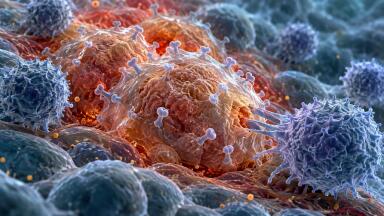
The researchers investigated whether a tardigrade protein could confer similar resilience on synthetic cells. These simplified cell-like systems are built from biological components such as lipids, proteins and nucleic acids. Their potential uses include medicine production in less costly facilities, targeted drug delivery, environmental biosensing and pollutant removal. However, many such systems remain fragile and usually require cold storage when not in use.
“A major bottleneck in modern biotech is that many valuable biological products – things like vaccines, enzymes, cell-free reagents or biosensors – are fragile and require refrigeration – or freezing – during transport from [manufacture] to end-user,” said Dr. Yongkang Xi, research fellow in mechanical engineering at the University of Michigan and co-first author of the study.
“This work shows a plausible way to change that,” he said.
Until now, researchers knew that CAHS12 was involved in the ability of tardigrade cells to withstand stress but its precise mechanism was not clear. The team used molecular modelling and laboratory experiments to show how the protein interacts with cell membranes during dehydration and how it forms an internal support network as water is lost.
“What we found is that there are particular parts of the proteins that are really important for binding to the cell membrane and other parts that are involved in building the fibrous support system,” said Dr. Andrew Ferguson, professor of molecular engineering at the University of Chicago Pritzker School of Molecular Engineering and co-corresponding author of the study.
“We used molecular modelling to show why CAHS12 causes this protective behaviour within synthetic cells and understand which parts of the protein lead to these properties,” he said.
The simulations indicated that CAHS12 has regions that interact with both the watery interior of the cell and the fatty molecules that make up the cell membrane. In hydrated cells, the proteins move freely. As the cells dry, however, the attraction between CAHS12 and the membrane becomes more important. The proteins gather and align near the membrane, then link together to form a three-dimensional gel network that fills the cell. This matrix appears to stabilise the cell surface and protect the more delicate contents inside.
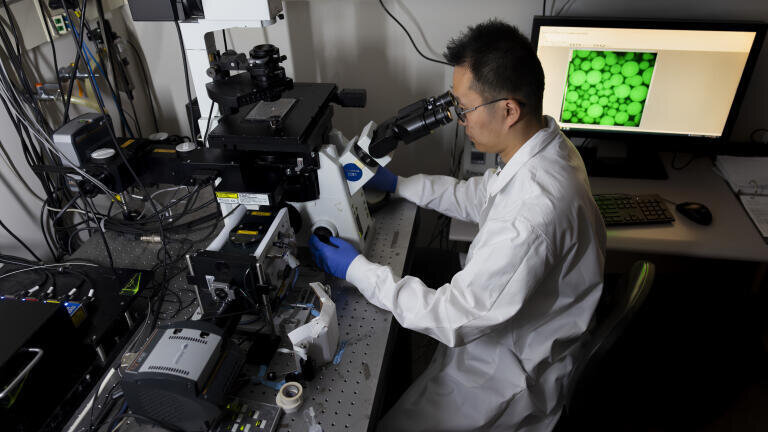
To test whether the same mechanism could protect synthetic cells, the University of Michigan researchers created synthetic cells that contained CAHS12 and then subjected them to dehydration and rehydration. The cells also contained DNA that encoded a red fluorescent protein, together with the molecular machinery needed to read those instructions and produce a fluorescent signal.
After the synthetic cells had been dried and rehydrated, the team examined whether their internal machinery had survived. The cells glowed red under the microscope, which showed that they had retained the ability to read DNA and produce protein after the stress of dehydration.
“What we see is that CAHS12 not only protects the membrane but it also preserves the internal content, maintaining the biological activity,” said Dr. Allen Liu, professor of mechanical engineering and biomedical engineering at the University of Michigan and co-corresponding author of the study.
The computational work also clarified how CAHS12 molecules self-assembled during dehydration. Jianming Mao, a doctoral candidate in chemistry at the University of Chicago and co-first author of the study, used coarse-grained molecular dynamics to examine how the protein behaved as water was removed, how long it interacted with the cell membrane and how those interactions helped to form the protective gel matrix.
The findings could help researchers to design synthetic proteins that preserve biological materials without continuous refrigeration. Such systems could make synthetic cells and other fragile biological products easier to store, ship and deploy, particularly in settings where cold-chain logistics are expensive or unreliable. At the point of use, the addition of water could reactivate the preserved material.
For further reading please visit: 10.1038/s41467-026-72328-5
ILM 51.6 Sept 2026



 Product directory













,-photo-Karin-Allander.jpg)





.jpg)
