Research news
Mount Sinai researchers have developed a scalable manufacturing platform for live biotherapeutic products based on defined bacterial strains, with an early clinical study suggesting comparable safety and efficacy to faecal microbiota transplant in recurrent Clostridioides difficile infection
Researchers at the Icahn School of Medicine at Mount Sinai, New York, USA, have developed a manufacturing platform to produce targeted mixtures of beneficial gut bacteria, in an approach that could help to broaden access to microbiome-based therapies for patients with recurrent Clostridioides difficile (C. diff) infection.
Recurrent C. diff can be a serious, debilitating and difficult to treat condition that can be particularly serious for the elderly. It may occur after antibiotic treatment disrupts the natural balance of bacteria in the gut, which can allow C. diff to proliferate and cause repeated episodes of disease.
Faecal microbiota transplant (FMT) has proved effective for many patients. It is a treatment that transfers stool from healthy donors to restore a more diverse gut microbiome in patients with severe or recurrent infections. However it is a resource-intensive therapy and more standardised, reproducible and scalable options are needed if microbiome-based treatments are to become more widely available.
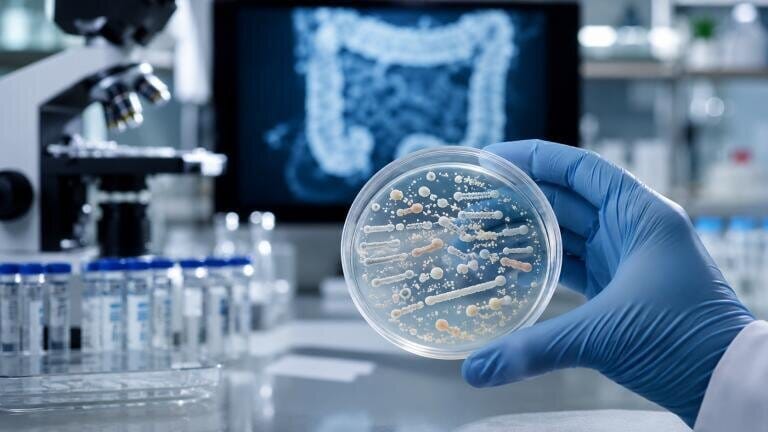
To address this challenge, the Mount Sinai investigators developed a production platform capable of manufacturing a live biotherapeutic product (LBT) composed of known bacterial strains rather than whole-stool material, at a lower cost. Live biotherapeutic products are therapies that contain living microorganisms intended to prevent, treat or cure disease. In this case, the platform was designed to produce a defined consortium of beneficial gut bacteria under controlled manufacturing conditions.
The first product generated with the platform was evaluated in patients with recurrent C. diffi infection and compared directly with FMT prepared from the same donor source used to isolate the bacterial strains. This design allowed the researchers to compare an undefined stool-based therapy with a defined, laboratory-manufactured bacterial product derived from the same microbial starting material.
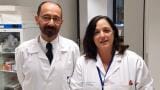
In a head-to-head phase 1b clinical study – led by co-senior and co-corresponding author Dr Ari Grinspan, assistant professor of medicine in gastroenterology and director of gastrointestinal microbial therapeutics at the Icahn School of Medicine at Mount Sinai – the team compared treatments based on microbes produced through the novel platform with FMT. The study enrolled 18 participants across four groups:
with between four and five patients in each arm.
“Microbiome therapies have shown enormous potential but manufacturing challenges have slowed broader clinical use. We wanted to create a practical, scalable way to produce defined bacterial therapeutics that could be manufactured consistently and rigorously tested,” said co-senior and co-corresponding author Dr Jeremiah J. Faith, professor of immunology and immunotherapy, genetics and genomic sciences, and medicine at the Icahn School of Medicine at Mount Sinai.
“And, for the first time, we demonstrated comparable safety and efficacy between undefined stool-based FMT and a defined, in vitro-manufactured LBP. We also found that bacterial strains delivered through both FMT and LBP durably engrafted in recipients,” he added.
The platform used a defined consortium of bacterial strains isolated from donor stool and grown under controlled manufacturing conditions. Unlike traditional FMT, which can vary between donors and between preparations, the platform has been designed to produce standardised microbial therapies at scale, according to the investigators. This could make it easier to assess product composition, monitor quality and develop treatments that meet pharmaceutical manufacturing expectations.
“Our goal was to move beyond stool-based therapies toward something more precise and reproducible,” Grinspan said.
“By defining exactly which bacterial strains are included, we can better understand how these therapies work and potentially improve safety, quality control, and scalability,” he added.
The researchers said the findings supported the feasibility of manufacturing defined microbiome therapeutics that may eventually offer a more standardised alternative to traditional faecal microbiota transplant. Such an approach could be particularly important for conditions where clinicians need reliable microbial products with consistent composition, controlled production methods and the potential for broader distribution.
“Our study represents an important step toward industrial-scale microbiome therapeutics,” said Faith.
“We believe defined live biotherapeutic products could help make these treatments more accessible while preserving the therapeutic benefits seen with donor-derived microbiota,” he said.
The authors noted that further studies will be needed to evaluate long-term efficacy, safety and broader clinical applications of the platform and additional larger studies will be required to confirm clinical benefit, assess durability and determine how defined bacterial products compare with existing microbiome-based treatments in wider patient populations.
The investigators plan to next use the platform to develop and test live biotherapeutic products for additional inflammatory and infectious diseases. They also aim to make the platform technology available to other researchers who work in live microbial therapeutics, with the intention to accelerate the translation of microbiome science into clinical care.
Although the 15-strain consortium in this study was administered by colonoscopy, the investigators have since developed an oral formulation intended to offer a more convenient route of delivery in future clinical studies. An oral product could make treatment easier for patients and more practical for healthcare systems if larger trials support its safety and efficacy.
The drug was manufactured by lead author Dr Lukas Bethlehem, a fellow in Faith’s laboratory, using a custom-built anaerobic chamber adhering to Good Manufacturing Practice guidelines for the production of live biotherapeutic products in anaerobic conditions given many gut bacteria cannot tolerate oxygen.
For further reading please visit: 10.1038/s41591-026-04442-2
ILM 51.6 Sept 2026



 Product directory


















,-photo-Karin-Allander.jpg)





.jpg)
