Research news
A recent study has suggested that even limited contact with routine medical care can shift the human microbiome towards patterns more often seen in industrialised populations – the strongest effects being observed in children
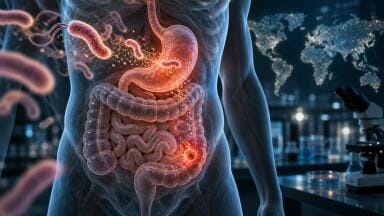
Minimal exposure to modern medical care may rapidly alter the human microbiome, according to research that has examined Indigenous communities in remote areas of the Venezuelan Amazon.
The study has suggested that gut microbes in communities with little previous exposure to modern medicine began to move towards microbiome profiles more commonly associated with urban and industrialised populations after only a small number of medical visits. The findings add to evidence that the human microbiome is highly responsive to external pressures and may be affected not only by diet, sanitation, environment and urbanisation but also by routine medical intervention.
“The study gives us a better idea of how sensitive human gut microbes are,” said corresponding author Dr. Maria G. Dominguez-Bello, of Rutgers University in New Jersey, USA.
“It opens the door for future research on how we can restore our microbiota after using medicines like antibiotics, which can deplete organisms in our gut,” she said.
The human microbiome consists of the bacteria, viruses, fungi and other microorganisms that live in and on the body. These microbial communities are involved in digestion, immune regulation, metabolism and protection against pathogens. Previous research has shown that people in industrialised societies tend to have a less diverse gut microbiota than people who live in rural or traditional communities, particularly those who consume high-fibre diets and have limited exposure to antibiotics and processed foods.
However, it has been difficult for scientists to determine which aspects of urbanisation have the greatest effect on the microbiome. Changes in diet, housing, sanitation, contact with animals, antibiotic exposure, infectious disease patterns and environmental conditions often occur together, which makes it hard to separate one influence from another.
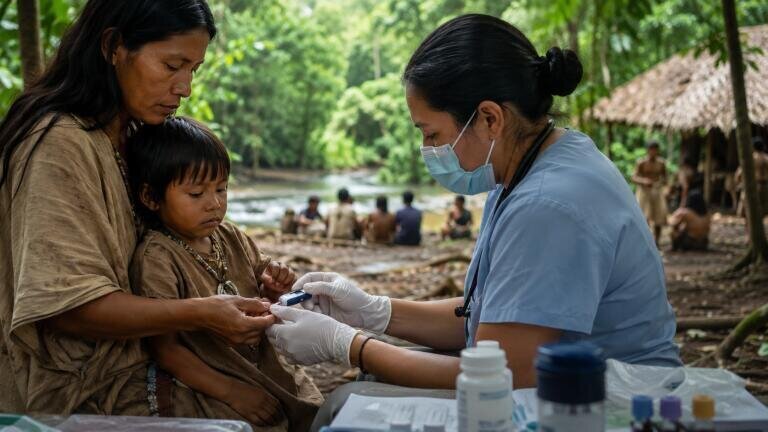
The researchers said that remote indigenous communities in Venezuela offered an unusual opportunity to examine the effect of medical exposure in relative isolation. These communities live in Amazonian jungle environments and rely on ancestral knowledge and traditional technologies to fish, hunt, gather and cultivate food. Their diets and ways of life have remained largely stable compared with those of urban populations.
Since late 2015, some villages have received quarterly medical visits through a programme supported by the World Health Organization to treat and prevent onchocerciasis, a disease also known as ‘river blindness’.
Onchocerciasis is a parasitic disease caused by infection with Onchocerca volvulus –a parasitic nematode worm – and transmitted through the bites of infected blackflies. It can cause severe itching, skin disease and visual impairment and remains endemic in parts of Africa and Latin America. Through the programme, villagers received routine antiparasitic treatment as well as basic medical care.
“The programme offered a rare natural experiment,” said Dominguez-Bello.
“We know from studies in urban societies that antibiotics can have huge impacts on gut microbes. But we did not know how even basic medicine might affect people with very limited exposure to medicine,” she added.
The research team visited the villages alongside medical teams in October 2015 and again in February 2016. During these visits, the scientists collected samples from the gut, mouth, nose and skin of 335 participants to assess how microbial communities changed after contact with medical care.
The researchers found that the villagers’ gut microbiota began to resemble that of people who live in industrialised societies after the first medical visit, even though there had been no major change in diet or lifestyle. During four months of treatment, gut microbial diversity declined. Populations of Prevotella and Treponema, bacterial groups often associated with fibre digestion and traditional high-fibre diets, also diminished.
At the same time, bacterial groups such as Bacteroidota and Verrucomicrobia – more commonly found in populations from industrialised regions – became more abundant. These shifts suggested that medical exposure may have helped to drive the microbiome towards a more urbanised configuration, even in the absence of broader lifestyle change.
The pattern was consistent with observations from a village that had experienced longer-term medical contact, where some microbial groups had become progressively less common. The strongest changes were seen in children, which may indicate that the developing microbiome is particularly sensitive to medical exposure and environmental change.
The team also assessed how microbial function may have changed. After treatment, microbial genes involved in the breakdown of simple carbohydrates became more common in the gut, as did genes associated with antimicrobial resistance. By contrast, genes linked to certain metabolic processes and fibre fermentation declined. This functional shift may be important because fibre fermentation by gut microbes produces short-chain fatty acids, which have been linked to intestinal health, immune function and metabolic regulation.
“The people living in these villages have almost twice the gut microbial diversity [compared to an average American], and high diversity means they have multiple microbes performing similar functions,” said Dominguez-Bello.
“There is still a big difference between the microbiome of these communities and the average person in the USA. But if diversity continues to decline, there could be risks of losing important functions.”
Researchers also identified shifts in microbial communities in the mouth, nose and skin, although each body site responded differently. Oral microbial diversity declined after medical exposure, while nasal microbial communities showed increased diversity after the first medical visit. These findings suggest that different microbial ecosystems across the body may respond to medical exposure through distinct mechanisms.
The study does not argue against medical programmes designed to treat infectious disease. Public health interventions against conditions such as river blindness can be life-saving and can prevent severe disability. However, the researchers said that future strategies could consider how to preserve or restore beneficial microbial diversity, particularly in populations that have historically had little exposure to antibiotics and other medicines.
“Our findings suggest the microbiome is very sensitive and can change quickly,” said Dominguez-Bello.
“Many conditions, from obesity to allergies and even some cancers, are linked to gut microbes. Understanding how to protect and restore microbial diversity could become an important part of improving our health,” she concluded.
The findings raise wider questions about how health systems can balance the clear benefits of infectious disease control with a better understanding of the microbiome as part of human biology.
For further reading please visit: 10.1016/j.celrep.2026.117343
ILM 51.6 Sept 2026



 Product directory













,-photo-Karin-Allander.jpg)




.jpg)
