Research news
Researchers have developed a haemoglobin-based nanoparticle to deliver tigecycline directly to Klebsiella pneumoniae infection sites, with mouse studies to show improved lung drug concentrations and reduced toxicity
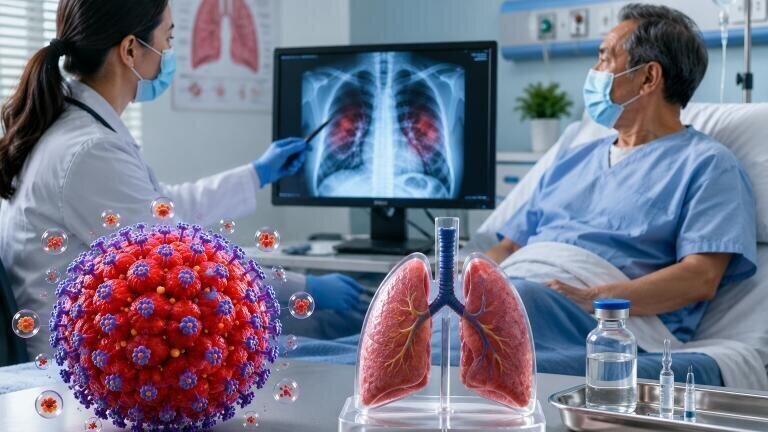
A research team led by Professor Lei Luo at Southwest University, Chongqing, China, has reported a haemoglobin-based nanoparticle that can deliver the antibiotic tigecycline directly to sites of Klebsiella pneumoniae infection, a development that may offer a more targeted approach to multidrug-resistant pneumonia.
The study describes a tigecycline-loaded haemoglobin-based nanoparticle (TIG-HBNP) designed to exploit the bacterium’s biological dependence on iron. K. pneumoniae is a major cause of severe pneumonia – particularly in hospital and healthcare-associated infections – and has become increasingly difficult to treat because many strains have acquired resistance to multiple antibiotics.
Tigecycline is often used as a last-resort antibiotic against serious drug-resistant bacterial infections. However, its clinical value in pneumonia has been limited by the way it distributes throughout the body. Rather than concentrate efficiently in the lung tissue where infection occurs, free tigecycline can spread widely, which may leave insufficiently high drug levels local to the infection site while raising the risk of dose-limiting toxicity elsewhere.
To address this problem, the researchers used haemoglobin as a biological carrier. Haemoglobin is rich in iron and is naturally recognised and taken up by K. pneumoniae, which requires iron to support growth and survival. This made it a promising vehicle to guide tigecycline towards infected tissue rather than allow the antibiotic to circulate without specificity.
The nanoparticles developed by the team had a diameter of approximately 200 nanometres. They achieved a drug-loading efficiency of more than 20 per cent and showed a slow-release profile, with less than 15 per cent of the antibiotic released across 96 hours. The researchers also reported favourable biocompatibility, with haemolysis rates below 5 per cent at therapeutic doses.
In laboratory experiments, fluorescently labelled haemoglobin-based nanoparticles bound specifically to four different strains of K. pneumoniae. Control nanoparticles did not show the same targeted interaction, which suggested that the haemoglobin component had an important role in bacterial recognition.
The team then tested the approach in mice infected with K. pneumoniae. Near-infrared-labelled nanoparticles accumulated specifically in the lungs within two hours. The intensity of the fluorescent signal was directly proportional to bacterial load in the infected tissue, which indicated that nanoparticle accumulation reflected the severity of infection.
Pharmacokinetic studies showed that TIG-HBNPs extended the half-life of tigecycline from 3.69 hours to 5.51 hours. The nanoparticle formulation also maintained high concentrations of the antibiotic in lung tissue for as long as 48 hours, a significant improvement compared with free tigecycline.
In a mouse model of K. pneumoniae-induced pneumonia, TIG-HBNPs performed better than free tigecycline. Treated mice showed improved survival, lower bacterial burden in the lungs, reduced inflammation and decreased macrophage infiltration. The researchers also reported no signs of toxicity in healthy mice treated with the nanoparticles.
A further advantage of the approach is that haemoglobin is an endogenous protein, which may reduce the risk of immune reactions associated with some synthetic delivery systems. The researchers suggested that the platform could be adapted for other pathogenic bacteria that rely on similar nutrient-acquisition pathways.
The findings indicate that a broadly distributed antibiotic can be converted into a more precise antimicrobial therapy by use of a biologically recognised carrier. Although the work remains preclinical, the TIG-HBNP strategy has opened a possible route towards more effective treatment for drug-resistant bacterial pneumonia.
For further reading please visit: 10.34133/bmef.0241
ILM 51.6 Sept 2026



 Product directory

















,-photo-Karin-Allander.jpg)






.jpg)
