Research news
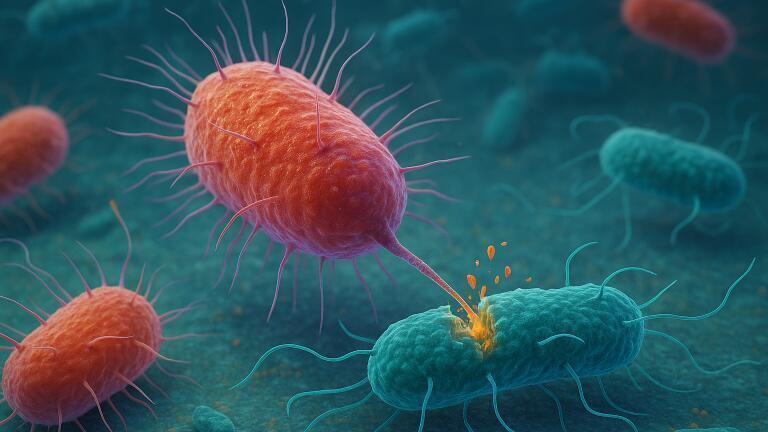
Archaea – a major domain of single-celled microorganisms which is distinct from bacteria and eukaryotes – has been found to produce potent antibacterial proteins, according to research that has highlighted their potential as a reservoir for novel antimicrobials. The study undertaken by researchers from the University of Oxford and the UK’s Medical Research Council Laboratory of Medical Sciences, has provided the first insight into the molecular defences of archaea and underscored the value of surveying diverse microbes to identify previously unknown chemical weapons against antimicrobial resistance.
Microorganisms compete for space and resources by producing molecules to inhibit or destroy rivals. While all existing antibiotics originated from such systems, investigations have focused almost exclusively on bacteria and fungi. Archaea, which number more than 20,000 known species, frequently live among dense bacterial populations and are therefore likely to require mechanisms by which to compete and survive.
The researchers analysed the genomes of more than 3,700 archaeal species to identify genes encoding proteins capable of degrading peptidoglycan – a key structural component of bacterial cell walls that archaea themselves do not possess. Such proteins were found in about 5% of the species examined, with some harbouring several distinct types.
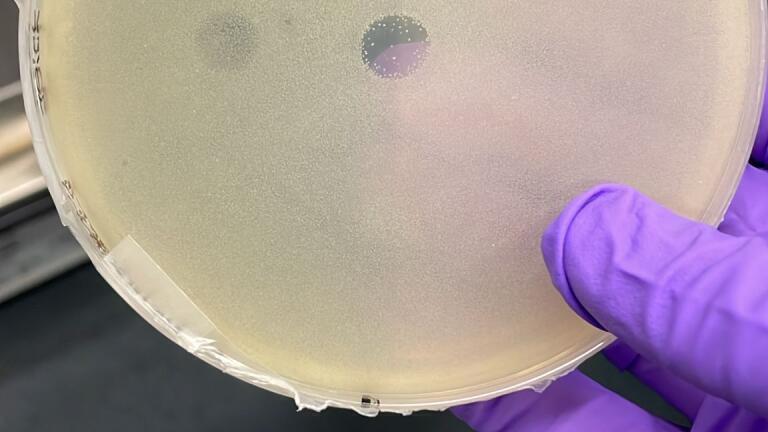
Laboratory tests demonstrated that these proteins could kill bacteria, and structural studies suggested that many were secreted from the archaeal cell. Some species also carried genes for components of injection systems that might directly deliver these proteins into competing bacteria.
Much remains to be discovered about the role of these molecular weapons in natural environments. The peptidoglycan-degrading proteins represent only one category of antibacterial agents that may be present among archaea.
“Archaea are their own Domain of Life, different from bacteria, and different from eukaryotes,” said Tobias Warnecke, senior author of the study.
“We know very little about their social lives, including how they interact with their ubiquitous brethren – bacteria.
“Our work sheds light on these interactions and suggests that archaea might be a large, untapped reservoir for discovering novel antimicrobials,” he concluded.
First author Romain Strock added: “Archaea are often depicted as either lone extremophiles or syntrophic partners.
“Our research reveals another, darker side to their social life.”
Archaea share a superficially similar cell structure with bacteria but differ in genetic composition, evolutionary history, and membrane chemistry. They inhabit environments ranging from extreme heat, salinity, and acidity to more temperate habitats, including soils, oceans, and the human gut.
Many are methanogens, producing methane as a metabolic by-product, and none are known to cause disease in humans or animals. Their enzymes are valued in biotechnology for their stability under extreme conditions, and they play essential roles in global nutrient cycling.
For further reading please visit: 10.1371/journal.pbio.3003235
ILM 51.6 Sept 2026



 Product directory





















,-photo-Karin-Allander.jpg)







.jpg)
