Research news
A phase 1 trial co-led by Washington University School of Medicine in St Louis has found that an individualised DNA vaccine was safe and generated broad immune responses in patients with a hard-to-treat subtype of glioblastoma, with one participant still recurrence-free nearly five years post-diagnosis
A personalised vaccine to treat glioblastoma – a fast-growing and currently incurable brain cancer – has been shown to be safe and to stimulate robust, broad immune responses in an early-stage clinical trial co-led by researchers at Washington University School of Medicine in St Louis.
The phase 1 trial, conducted at the Siteman Cancer Center assessed the vaccine in patients with an especially aggressive form of glioblastoma. Siteman is based at Barnes-Jewish Hospital, and Washington University Medicine (WUM) both in St. Louis, Missouri, USA. The study was led jointly by Mass General Brigham, Boston, Massachusetts and Geneos Therapeutics which is a Philadelphia-based biotechnology company.
Glioblastoma is estimated to affect between around 250,000 to 400,000 people worldwide each year and remains one of the most difficult brain cancers to treat. Standard of care treatment usually involves surgery followed by chemotherapy and radiotherapy. Recurrence, however, is common and survival rates remain poor.
In the trial, the personalised DNA vaccine caused no serious side effects and appeared to extend recurrence-free survival in a subset of patients post-surgery. Overall survival was also prolonged when compared with historical outcomes after standard-of-care surgery and chemoradiotherapy. One long-term survivor has remained free of recurrence for almost five years.
“This kind of vaccine is a first for glioblastoma, and it is exciting to think how we can [use] this individualised therapeutic DNA cancer vaccine platform to make a positive impact on the lives of patients,” said Dr. Tanner M Johanns, lead author of the study and an assistant professor in the division of oncology in the John T Milliken Department of Medicine at WUM.
“Additionally, combination therapies leveraging this personalised platform are currently being investigated at WUM to test if outcomes may be improved further,” he said.
The investigational treatment used engineered DNA molecules designed to train each patient’s immune system to recognise and attack their cancer. Each tumour contains distinctive proteins that are specific to that patient’s cancer cells. The vaccine was designed to direct immune responses against these proteins and to help the immune system identify and eliminate tumour cells.
Johanns said some immunotherapies that target glioblastoma had shown promise in earlier studies but had ultimately failed to delay or prevent recurrence to a significant degree. One reason is that glioblastoma can evolve and escape immune attack. The vaccine used in this study was designed to reduce that risk by helping the immune system to recognise many different targets on cancer cells. Even if the tumour were to lose several of those targets, the vaccine could still generate immune responses against others.
Glioblastoma is also often described as a ‘cold’ tumour, which means that the tumour microenvironment can remain poorly visible to the immune system. The cancer vaccine used in the trial – developed by Geneos Therapeutics – was designed to help convert such tumours into ‘hot’ tumours, in which immune cells can enter, recognise cancer-associated targets and mount an anti-tumour response. The approach therefore sought both to target proteins on cancer cells and to alter the tumour environment in favour of immune activation.
“We chose a DNA-based platform because it would allow us an opportunity to target more cancer proteins than any vaccine had targeted before,” said Johanns, who treats patients at Siteman and also conducts research there.
“Our thinking was that if we could generate a broader range of immune responses against those proteins then it may lead to a more potent vaccine compared to other vaccine platforms with more limited protein targets,” he added.
The DNA-based vaccine platform activated immune responses against as many as 40 cancer proteins specific to each patient’s tumour. According to the research team, this was twice as many as had previously been targeted by any cancer vaccine therapy.
The vaccine – known as GNOS-PV01 – targeted neoantigens which are proteins unique to an individual patient’s cancer cells and capable of recognition by immune cells. These neoantigens were identified and selected with an algorithm developed at WUM by computational biologists Dr. Obi Griffith, professor of medicine, and Dr. Malachi Griffith, associate professor of medicine, both at the division of oncology and research members at Siteman.
Johanns and colleagues selected neoantigens from different regions of each patient’s tumour to increase the number and diversity of cancer cell proteins targeted by the vaccine.
The idea to bring GNOS-PV01 vaccine to WUM for use against glioblastoma was inspired in part by a different DNA-based vaccine technology for breast cancer developed by co-author Dr. William Gillanders, the ‘Mary Culver Distinguished Professor of Surgery’ at WUM, and who also treats patients at Siteman.
The trial enrolled nine adult patients who had been recently diagnosed with glioblastoma, all of whom were treated at Siteman. For each patient, the team prepared a synthetic DNA molecule that encoded unique information from that patient’s tumour neoantigens. The vaccine was manufactured at the Biologic Therapy Core Facility at Siteman during the patient’s recovery after surgery and during subsequent radiotherapy.
On average vaccine injections began 10 weeks after surgery. They were given every three weeks for a nine-week period and then every nine weeks thereafter for as long as each patient was able to participate. All participants except one, who was taking an immune-suppressive steroid, showed increased immune-cell activity consistent with a response to the vaccine intervention.
Two-thirds of the patients had no progression of their cancer six months after surgery and two-thirds survived for one year. Typically, about 40 per cent of glioblastoma patients reach either milestone.
However, importantly, two-thirds of participants were still alive after two years which is twice the historical survival rate for this patient population. And one participant remains alive and is recurrence-free almost five years after her initial diagnosis.
That participant, Kim Garland, is a retired school nurse who lives in Kirkwood, Missouri, with Scott, her husband of 31 years. In June 2021, at the age of 62, she was volunteering at a youth camp in Ironton, Missouri, when her daughter-in-law, who was also volunteering at the camp, noticed that Garland had confusion, forgetfulness and headaches that came and went throughout the day.
“I was forgetting things, things that should have been very obvious,” said Kim Garland.
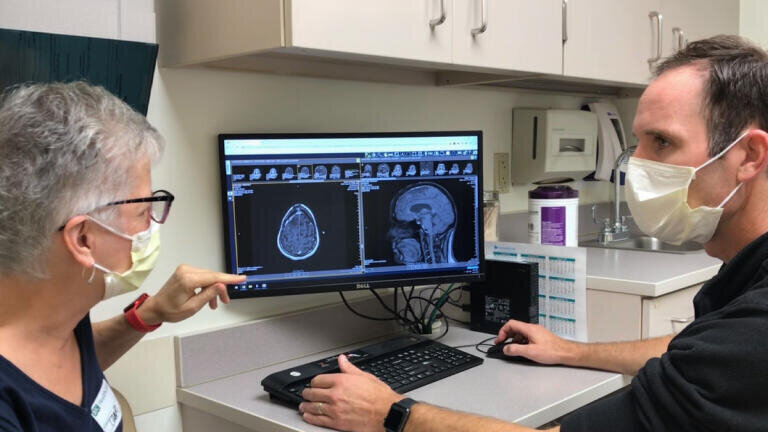
A scan at a local hospital emergency department in St Louis revealed a 6.5 cm mass in Garland’s brain, about the size of an avocado. Within a week, Dr. Albert Kim, the ‘August A Busch Jr Professor of Neurological Surgery’ at WUM, and director of the Brain Tumor Center at Siteman performed the initial surgery to remove the tumour. Dr. Kim is a co-author of the study.
The diagnosis of grade 4 glioblastoma was confirmed after the tumour had been removed. When offered the chance to take part in the clinical trial, Garland agreed in the hope that her participation would help to improve future treatments. After the diagnosis, she and her husband did not expect her to be alive without recurrence nearly five years later.
“Cancer vaccines have a long history, and the development of personalised neoantigen-targeting therapeutic vaccines now represents a highly compelling approach in glioblastoma and in other cancers,” said co-senior author Dr. Gavin Dunn, a neurosurgical oncologist at Mass General Brigham Cancer Institute.
“These programmes require a high degree of integrated teamwork, and we are fortunate to have collaborated with many dedicated team members in this effort,” he said.
Garland’s cancer, like that of the other patients in the trial, was an unmethylated O6-methylguanine-DNA methyltransferase subtype of glioblastoma. This subtype is particularly difficult to treat because it is less responsive to available options such as chemotherapy.
Johanns said the next step was to assess the vaccine’s efficacy in a larger group of patients and to expand the treatment approach to all types of glioblastoma with the goal of improving vaccine responses.
For further reading please visit: 10.1038/s43018-026-01163-w
ILM 51.6 Sept 2026



 Product directory




















,-photo-Karin-Allander.jpg)







.jpg)
