Research news
A new avenue for early diagnosis and management of diabetic retinopathy
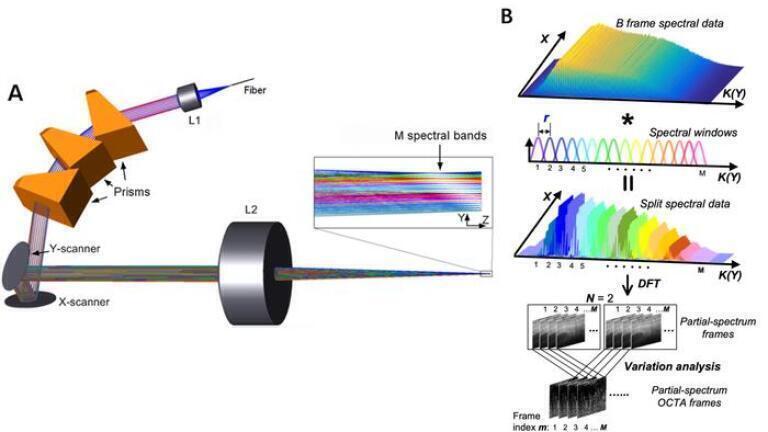
A new optical imaging technique developed by an international team of researchers promises to transform early diagnosis and disease monitoring by dramatically expanding the capabilities of optical coherence tomography angiography (OCTA). The study, led by Professor Linbo Liu of Guangzhou National Laboratory, China, introduces a novel approach known as spectrally extended line field OCTA (SELF-OCTA), which addresses longstanding clinical limitations in imaging speed, field of view and blood flow quantification.
The research was carried out in collaboration with Professor Jia Qu of Oujiang Laboratory; Professor Xiaokun Wang and Yukun Wang of the Changchun Institute of Optics, Fine Mechanics and Physics, Chinese Academy of Sciences; Professor Xin Ge of Sun Yat-sen University and Dr Chen Hsin Sun of the National University of Singapore.
Dr Si Chen, the study’s first author, led on the development of the SELF-OCTA technology and extended its application to both retinal and skin imaging. The innovation overcomes key performance bottlenecks of conventional OCTA, delivering at least a threefold increase in imaging field of view and more than a twofold improvement in signal strength.
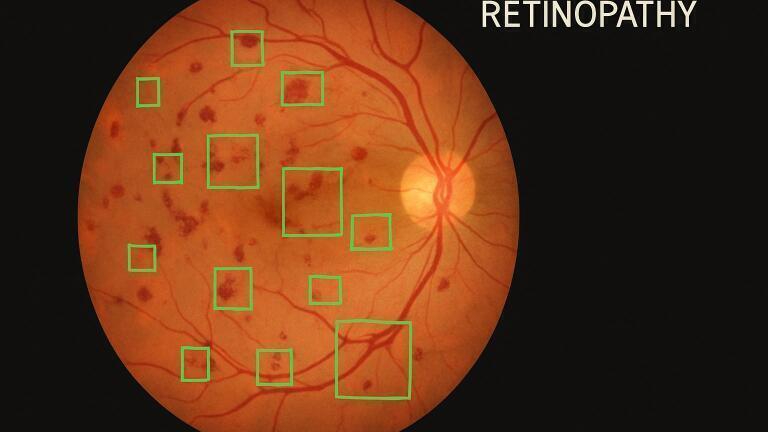
This advance is particularly significant for the early diagnosis and management of diabetic retinopathy, a condition in which lesions often appear in the peripheral retina. Existing OCTA systems, with their limited field of view, frequently miss these peripheral indicators. SELF-OCTA, with its expanded coverage, offers a solution to this critical gap.
Moreover, SELF-OCTA enables, for the first time, in vivo quantification of human retinal blood flow velocity down to the capillary level across a clinically meaningful field of view and wide velocity range. This is a breakthrough for diseases such as age-related macular degeneration (AMD), the leading cause of blindness in older populations and a growing socioeconomic concern.
Current diagnostic methods for AMD typically rely on detecting structural changes, such as neovascularisation or vessel dropout, which occur at advanced and often irreversible stages of the disease. In contrast, SELF-OCTA’s sensitivity to minute blood flow changes raises the possibility of identifying the disease at an earlier, potentially reversible phase, opening new avenues for treatment and disease prevention.
In addition to its ophthalmic applications, the team aims to leverage the ability of SELF-OCTA to track systemic vascular changes in the eye, with a view to developing predictive tools for cardiovascular and neurodegenerative diseases. With the combination of cost-effective SELF-OCTA hardware and artificial intelligence algorithms, large-scale screening for life- and vision-threatening conditions could become a clinical reality.
Professor Liu holds a BEng in Precision Instrumentation (2001) and an MEng in Optical Engineering (2004) from Tianjin University. He earned a PhD in Bioengineering from the School of Medicine at the National University of Singapore in 2008. From 2008 to 2011, he completed postdoctoral training at the Wellman Centre for Photomedicine, Harvard Medical School and Massachusetts General Hospital, where he pioneered micro-optical coherence tomography (µOCT).
He was subsequently appointed as Instructor in Dermatology at Harvard Medical School before joining Nanyang Technological University (2012–2024) as faculty in the Schools of Electrical and Electronic Engineering and Chemical and Biomedical Engineering. He is currently based at Guangzhou National Laboratory, where his research focuses on the development of non-invasive imaging technologies for disease diagnosis and life science research.
For further reading please visit: 10.29026/oea.2025.240293
ILM 51.6 Sept 2026



 Product directory



















,-photo-Karin-Allander.jpg)








.jpg)
