Research news
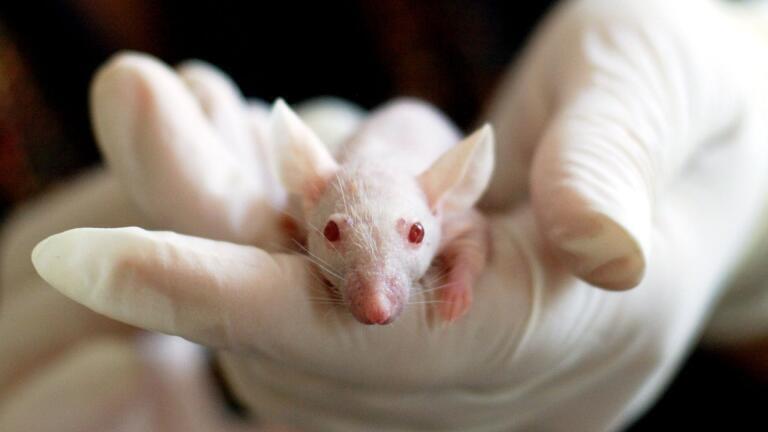
Researchers reporting in ACS Central Science have created a novel treatment that eliminated small-sized breast tumours and significantly shrank larger tumours in mice with just a single dose, and without problematic side effects.
Despite significant therapeutic advances, breast cancer remains a leading cause of cancer-related death in women. Treatment typically involves surgery and follow-up hormone therapy – the side effects of which can include osteoporosis, sexual dysfunction or blood clots.
Most breast cancers are oestrogen receptor positive (ER+), and treatment typically involves several years of hormone therapy. Although these drugs are better tolerated than chemotherapy, they still have side effects that diminish quality of life and can leave people at risk for cancer recurrence and treatment resistance. Thus, there is a need for cancer drugs that kill tumour cells selectively and aggressively, while limiting side effects.
To address this challenge, Paul Hergenrother and colleagues previously developed a small molecule called ErSO. This compound kills ER+ breast cancer cells but results in undesirable side effects. In 2022, the researchers synthesised a series of small molecules similar to ErSO. That prior study demonstrated that these derivatives have higher potency, greater selectivity for ER+ cancer cells and better pharmacological properties than the original compound.
Now, in the latest study, the researchers further evaluated one derivative, ErSO-TFPy, and found that it:
In a dosing experiment, the researchers noted that a single dose of ErSO-TFPy in mice induced complete or near-complete regression of small or large tumours, respectively, that had grown in the animals. Other drugs require long-term dosing, but the researchers suggest that a lone dose of ErSO-TFPy and therefore minimal circulation in the body could help reduce the risk of side effects and late effects. They acknowledge the need for more testing to confirm drug safety and efficacy, but they suggest if these results translate to human patients, ErSO-TFPy could be transformative for ER+ breast cancer treatment.
“It is very rare for a compound to shrink tumours in mouse models of breast cancer, let alone completely eradicate those tumours with a single dose, so we are eager for ErSO-TFPy to advance for treatment of breast cancer,” says Hergenrother.
The authors acknowledge funding from the National Cancer Institute at the National Institutes of Health and the Cancer Center at Illinois.
For further reading please visit: 10.1021/acscentsci.4c01628
ILM 51.6 Sept 2026



 Product directory



















,-photo-Karin-Allander.jpg)






.jpg)
