Research news
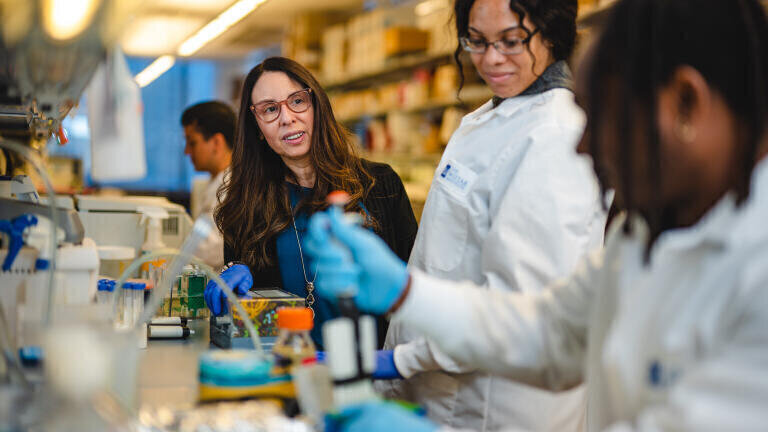
Researchers at The Wistar Institute, led by Jessie Villanueva, PhD, have discovered a potential strategy for treating treatment-resistant melanoma by targeting the gene S6K2. Their findings [1], published in Science Translational Medicine, reveal that inhibiting S6K2 could enhance the therapeutic response in NRASMUT melanoma, a form resistant to MAPK inhibitors.
Melanoma, the deadliest form of skin cancer, continues to rise in incidence, particularly among individuals under 30. While significant progress has been made in melanoma treatment, resistance to current therapies remains a major challenge. NRASMUT melanoma, which accounts for approximately 30% of all melanoma cases, has shown limited response to MAPK inhibitors, with treatment failure in up to 80% of cases. To overcome this, the Villanueva lab focused on understanding the molecular mechanisms behind resistance in NRASMUT melanoma.
Through a detailed analysis of genetic and molecular changes in response to MAPK inhibition, the team identified S6K2 as a key player in treatment resistance. Their research demonstrated that high expression of S6K2 was associated with poor patient outcomes and resistance to MAPK inhibitors. In the lab, silencing S6K2 effectively induced cell death in NRASMUT melanoma cell lines, revealing its potential as a therapeutic target.
Further investigation revealed that inhibiting S6K2 disrupted lipid metabolism in resistant melanoma cells, a crucial process for their survival. This insight led the team to explore additional treatment strategies. They found that targeting PPARα, another gene influenced by S6K2 inhibition, enhanced the anti-cancer effect. By combining fenofibrate (a PPARα activator) and DHA (Omega-3), the researchers successfully induced cell death in MAPKi-resistant melanoma cells.
Notably, many of the compounds tested, such as fenofibrate, are already used in humans for other purposes, suggesting a low toxicity profile and a clear path for clinical translation. According to co-first author Brittany Lipchick, Ph.D., the combination treatment shows promise not only for its efficacy but also for its safety, offering hope for future clinical trials. Fellow co-first author Adam Guterres, Ph.D., emphasised that this work opens new avenues for treating melanoma without relying on highly toxic therapies. The findings offer an exciting direction for future melanoma treatments.
More information online
1. Selective abrogation of S6K2 maps lipid homeostasis as a survival vulnerability in MAPKi-resistant NRASMUT melanoma,, published in Science Translational Medicine.
Co-authors: Brittany Lipchick1, Adam N. Guterres1, Hsin-Yi Chen1, Delaine M. Zundell1, Segundo Del Aguila1, Patricia I. Reyes-Uribe1, Yulissa Tirado1, Subhasree Basu1, Xiangfan Yin1, Andrew V. Kossenkov1, Yiling Lu2, Gordon B. Mills3, Qin Liu1, Aaron R. Goldman1, Maureen E. Murphy1, David W. Speicher1, and Jessie Villanueva1
1The Wistar Institute, Philadelphia, Pennsylvania 19104
2The University of Texas MD Anderson Cancer Center
3Knight Cancer Institute, Oregon Health & Sciences University
ILM 51.6 Sept 2026



 Product directory

















,-photo-Karin-Allander.jpg)



.jpg)
