Research news
Published over 2 years ago. See the latest and most current information on Research news.
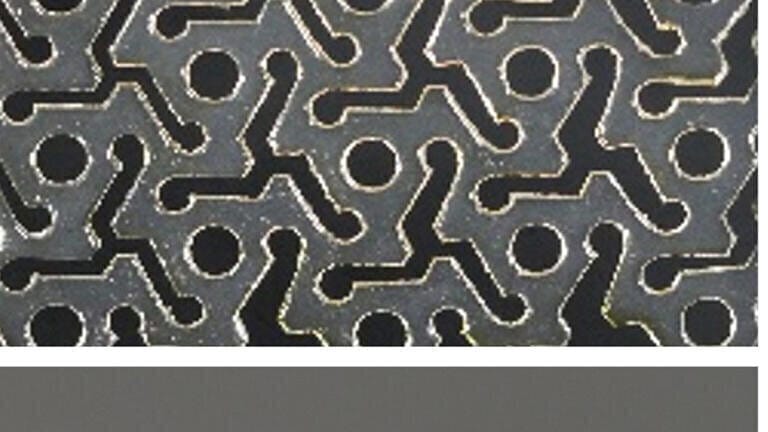
Researchers at Tokyo University of Agriculture and Technology (TUAT) have developed new methods for creating finely structured, soft, flexible, and expandable materials called hydrogels. Their work, published in the journal Science and Technology of Advanced Materials, extends the emerging field of 'kirigami hydrogels.' In this technique, patterns are cut into a thin film, which then swells into complex hydrogel structures upon exposure to water.
Hydrogels consist of a network of water-attracting (hydrophilic) molecules, enabling their structure to swell significantly when water is incorporated into the molecular network. Researchers Daisuke Nakagawa and Itsuo Hanasaki used an initially dry film composed of cellulose nanofibres, a natural material that forms much of the plant cell wall structure.
Using laser processing, they cut intricate structures into the film before adding water, allowing the film to swell. The kirigami pattern design increases the film's width when stretched longitudinally, demonstrating an auxetic property. This auxetic behaviour, characterised by an increase in width when stretched, emerges if the film's thickness sufficiently increases when wetted.
Hanasaki explained: "Kirigami, meaning the cut design of paper, was originally intended for thin sheets. Our two-dimensional auxetic mechanism manifests when the film's thickness is adequate, creating a three-dimensional hydrogel structure upon swelling. It's convenient to store it dry before use, rather than maintaining the same water content level as the hydrogel."
The auxetic property is maintained during cyclic loading, which causes the hydrogel to adapt to another structural state, making it crucial for designing intelligent materials. These adaptive hydrogels have potential applications in robotic technologies, where they can respond flexibly when interacting with objects. They may also be used in soft switches, sensor components, and medical applications, such as tissue engineering, wound dressings, and drug delivery systems.
The TUAT team's advancement in kirigami hydrogels significantly expands future hydrogel applications. Hanasaki concluded: "Keeping the designed characteristics while showing adaptivity to the environmental condition is advantageous for developing multifunctionality."
The research was published in Science and Technology of Advanced Materials (STAM)
More information online
ILM 51.6 Sept 2026




 Product directory















,-photo-Karin-Allander.jpg)