-and-Ezio-Rosato.jpg)
-(002).jpg)
Research news
A team of researchers has secured £3 million in funding from the Wellcome Trust to uncover the biological mechanisms behind magnetoreception - the ability of animals, including humans, to sense magnetic fields.
While many species, such as migratory birds, are known to rely on Earth’s magnetic field for navigation, emerging evidence suggests that magnetoreception may be a more widespread phenomenon across the animal kingdom. Despite this, the precise biological mechanisms enabling this ability remain a mystery.
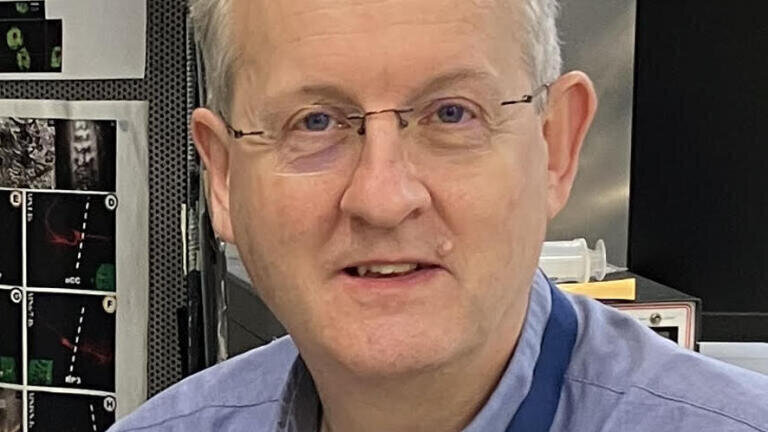
The multidisciplinary team includes Professors Ezio Rosato and Charalambos Kyriacou (University of Leicester), Professors Richard Baines and Stuart Peirson (Universities of Manchester and Oxford), and quantum scientist Dr Alex Jones (National Physical Laboratory). Together, they aim to bridge the gap between biology and quantum physics to unravel the fundamental processes behind magnetic sensing.
Professor Ezio Rosato explained: “Our research has identified Cryptochrome (CRY), a blue-light-sensitive protein, as central to magnetoreception. However, intriguingly, we have found that only a small section of this protein is required to trigger biological responses to magnetic fields. This suggests that different species may detect magnetic fields through multiple, yet-to-be-discovered pathways.”
Professor Baines added: “Understanding how this short CRY fragment functions is a key step in solving the puzzle of magnetoreception. This funding allows us to deepen our investigations into this remarkable phenomenon.”
Beyond its biological significance, the research has potential applications in medicine and technology. Dr Jones noted: “By developing an engineered version of CRY that enables precise magnetic stimulation of cells, we could create powerful new measurement tools for biological research. These could ultimately lead to novel therapeutic techniques based on magnetic cell modulation.”
Professor Kyriacou highlighted the unique nature of the project: “Our team combines expertise in behavioural biology, neurophysiology, and quantum physics. This interdisciplinary approach has already led to major discoveries, and we are now in a strong position to tackle one of biology’s longest-standing mysteries.”
The five-year project will advance understanding of magnetoreception and could open new frontiers in both fundamental biology and applied science.
More information online
ILM 51.6 Sept 2026



 Product directory



















,-photo-Karin-Allander.jpg)






.jpg)
