Research news
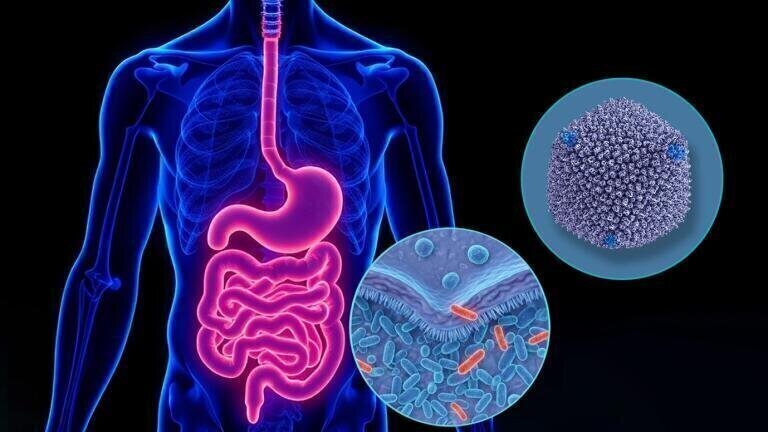
Researchers at the University of Liverpool have uncovered the step-by-step process by which pathogenic bacteria build specialised protein compartments, called Eut microcompartments, that allow them to digest ethanolamine - a nutrient abundant in the gut.
These microscopic structures are essential for bacterial growth and virulence. Mapping how they assemble provides crucial insight into how pathogens thrive in the gut and highlights potential targets for new antimicrobial strategies.
The study [1], published in Science Advances, combines advanced techniques including super-resolution fluorescence microscopy, structural biology, genetic engineering, biochemical assays, and computational modelling to track the roles of individual proteins in Salmonella’s Eut microcompartments.
By analysing bacteria with mutations in specific proteins, the team pinpointed the key steps in compartment construction. They found that the protein shell forms first, followed by the packing of enzymes required to break down ethanolamine. A protein called EutQ acts as a molecular linchpin, ensuring enzymes are correctly incorporated; without it, compartment assembly fails and bacterial growth is severely impaired.
The researchers also discovered that the enzymes inside the compartments behave like a liquid droplet, dynamically moving and interacting to enhance metabolic efficiency. Ethanolamine, released during cell membrane breakdown, serves as a vital carbon and nitrogen source for pathogens such as Salmonella.
Dr Mengru Yang, first author from the University of Liverpool’s Institute of Systems, Molecular and Integrative Biology, said:
"It was known that bacteria use these compartments to digest ethanolamine safely, but we can now see the precise molecular choreography behind their construction. Observing these dynamic protein condensates in action offers an unprecedented view of bacterial organelle assembly."
Professor Lu-Ning Liu, corresponding author, added:
"Our work uncovers fundamental mechanisms of microcompartment assembly, revealing new opportunities to disrupt pathogen metabolism. These insights could inform antimicrobial development and even synthetic biology applications."
The team plans to investigate how these assembly processes operate in other health-relevant bacteria, explore atomic-level protein interactions, and test ways to manipulate these systems for medical use.
This research was funded by the Biotechnology and Biological Sciences Research Council (BBSRC) and involved collaborators from Huazhong Agricultural University and Ocean University of China.
More information online
1. Molecular basis of the biogenesis of a protein organelle for ethanolamine utilization (doi.org/10.1126/sciadv.adx9774) published in Science Advances
ILM 51.6 Sept 2026



 Product directory


.jpg)
.jpg)















,-photo-Karin-Allander.jpg)