Research news
Researchers in Australia have uncovered a surprising Achilles’ heel in some of the world’s most dangerous, drug-resistant bacteria: a sugar molecule unique to bacterial cells. By designing antibodies that recognise this sugar, scientists have created a potential new class of therapies capable of targeting infections that resist even last-line antibiotics.
Published in Nature Chemical Biology [1], the study demonstrates that laboratory-made antibodies can clear lethal infections in mice by homing in on the sugar and flagging the bacteria for destruction by the immune system.
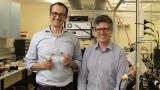
The research was co-led by Professor Richard Payne at the University of Sydney, alongside Professor Ethan Goddard-Borger at WEHI and Associate Professor Nichollas Scott at the University of Melbourne and the Peter Doherty Institute for Infection and Immunity.
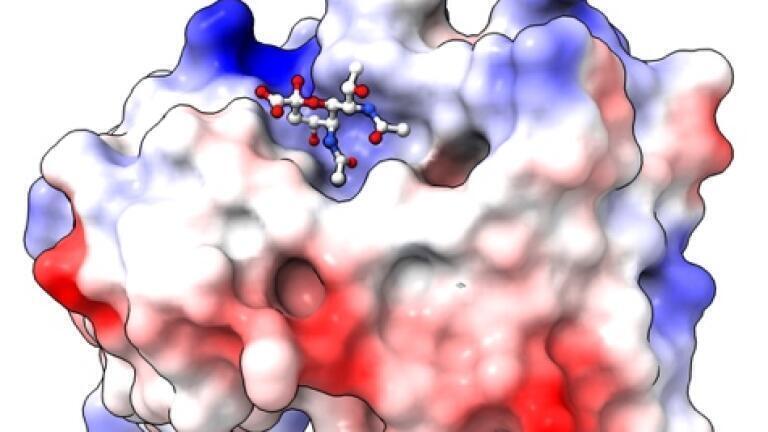
“This work shows the power of combining chemistry, immunology, and microbiology,” said Professor Payne. “By synthesising the bacterial sugar in the lab, we could map its shape and develop antibodies that latch on with precision, opening the door to treatments for some of the most stubborn infections in modern healthcare.”
The target sugar, pseudaminic acid, is found only in bacteria and is essential for many pathogens to evade immune responses. Humans do not produce it, making it an ideal target for selective therapy. Using synthetic chemistry, the team built sugar-decorated molecules to understand how the sugar sits on bacterial surfaces and created a ‘pan-specific’ antibody that recognises the sugar across multiple bacterial species.
In preclinical models, the antibody successfully eliminated multidrug-resistant Acinetobacter baumannii, a leading cause of hospital-acquired pneumonia and bloodstream infections.
“Some of these bacteria resist nearly all available antibiotics,” said Professor Goddard-Borger. “Our approach provides a proof-of-concept that passive immunotherapy can take the fight to these pathogens.”
Beyond treatment, the antibodies also serve as tools to map bacterial virulence, allowing researchers to see where these sugars appear and how they change across strains, feeding directly into better diagnostics and therapies.
Over the next five years, the team aims to advance these antibodies into clinical-ready therapeutics, potentially neutralising one of the most notorious pathogens in the ESKAPE group of multidrug-resistant bacteria.
Professor Payne added: “This is exactly the type of discovery our new ARC Centre of Excellence was designed to enable - turning molecular insights into real-world solutions that protect the most vulnerable patients.”
More information online
ILM 51.6 Sept 2026



 Product directory
















,-photo-Karin-Allander.jpg)



-with-research-lead-Dr-Sandro-Ataide-and-first-author-Rezwan-Siddiquee-(righ.jpg)