Liquid handling
Integrating a flowmeter into an existing system is rarely as simple as plugging it in. The challenges usually come not from the sensor itself, but from how it interacts with the process, the control system, and the environment it operates in. Approaching the task with careful engineering foresight - and involving specialists early - can save time, cut costs, and prevent headaches down the line.
The first step is clarity: why do you need the measurement? Is it for real-time monitoring, billing, reporting, or controlling a process loop? Does it need to be permanent, or just for commissioning or short-term verification? Over-specifying can create unnecessary complexity and expense. Often, a simple low-cost sensor feeding an existing processor is enough. For temporary measurements, clamp-on ultrasonic meters or timed collection methods can capture the needed data without modifying the system.
Engaging sensor specialists early is equally important. Too often, systems are fully designed - complete with sleek interfaces, AI analytics, and IoT connectivity - only to find there’s no space or straight pipe run for the sensor. Early collaboration clarifies what is realistically achievable, which devices can serve multiple loops, and how installation, wiring, and ongoing support will be handled.
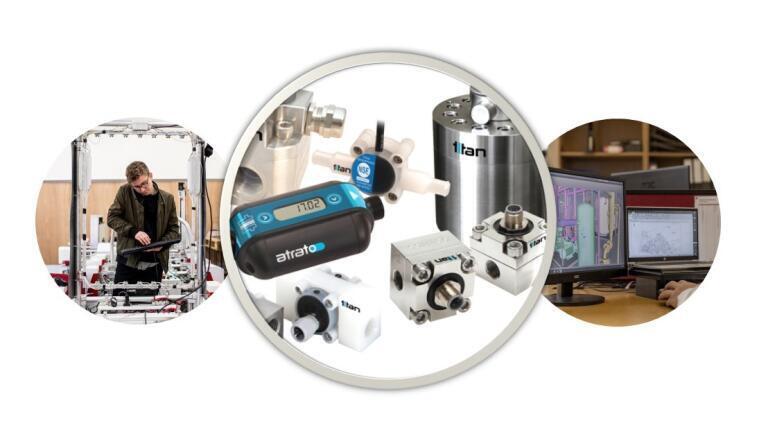
"When engineers involve us early, we can help design a system that integrates seamlessly and avoids costly rework," said Neil Hannay, Senior Development Engineer at Titan Enterprises. CAD models, preconfigured units, and clear guidance from the supplier can make all the difference.
Cost is more than the sticker price. Low-cost mechanical meters may seem attractive, but wear, contamination sensitivity, and frequent recalibration can raise operational risk. Non-intrusive technologies like ultrasonic meters may cost more upfront, but they reduce downtime, maintenance, and intervention - often lowering the total cost of ownership over time.
Finally, design for the real world. Flowmeters must handle start-ups, shutdowns, cleaning cycles, and transient events. Materials must be compatible with process fluids and system tolerances. Choosing the right technology and following installation instructions - flushing lines, providing straight pipe runs, and careful commissioning - are often the most effective ways to avoid premature failures.
At the end of the day, reliable flow measurement isn’t about fancy dashboards or analytics. It comes from a well-chosen, correctly installed sensor, guided by engineering expertise, supplier support, and practical lifecycle planning.
More information online
ILM 51.6 Sept 2026



 Product directory