Mass spectrometry & spectroscopy
Published over 4 years ago. See the latest and most current information on Mass spectrometry & spectroscopy.
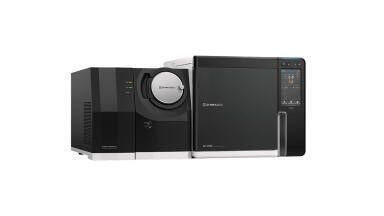
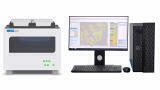
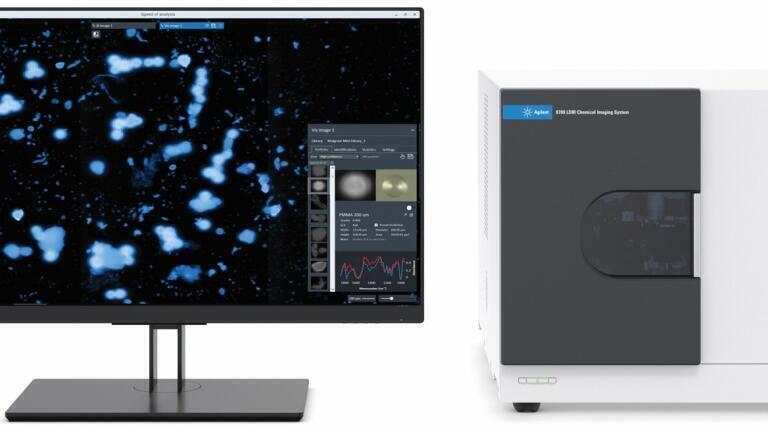
The enhanced 8700 LDIR Chemical Imaging System from Agilent Technologies has been further optimised for the analysis of microplastics in environmental samples. This newly improved package includes Clarity 1.5 software - a significant upgrade that advances the speed of analysis, enhances spectral acquisition, transformation, and library matching, and provides automated workflows for direct analysis of microplastics on a filter substrate. An innovative, redesigned sample holder allows the on-filter sample to be presented to the instrument more easily and consistently.
Slow and complex analysis solutions are a major challenge to microplastics analysis and have hindered studies of real-world systems. Additionally, method variability limits the comparability of studies, making trends difficult to assess. Vibrational spectroscopy methods such as FTIR and Raman microscopy provide a useful alternative, but each faces limitations due to the excessive time of analysis and method complexity.
The Agilent 8700 LDIR brings high-speed analysis and ease of use to infrared spectroscopy and has rapidly emerged as the benchmark technique for the analysis of microplastics particles. The development of on-filter analysis for this platform marks another leap forward in speed and throughput. The ability to significantly increase testing volumes will allow a greater understanding of the extent of microplastics contamination in the environment and will help facilitate the development of appropriate standards and regulations.
Geoff Winkett, Vice President and General Manager for Agilent’s Molecular Spectroscopy Division, discussed the announcement’s impact. "When I speak with microplastics researchers, a recurring question is how to make testing faster and easier, as there is a real concern that the limited sample numbers that can be realistically processed may be masking the true nature of the issue," he said. "The fact is that other currently available techniques are too slow and cannot capture the extent of the microplastics load in drinking and environmental waters. Fast and easy-to-use analysis methods such as the 8700 LDIR provide an essential and much-needed alternative that enables researchers to increase sampling over area or time to address these limitations."
More information online
ILM 51.6 Sept 2026


 Product directory