Mass spectrometry & spectroscopy
Published over 7 years ago. See the latest and most current information on Mass spectrometry & spectroscopy.
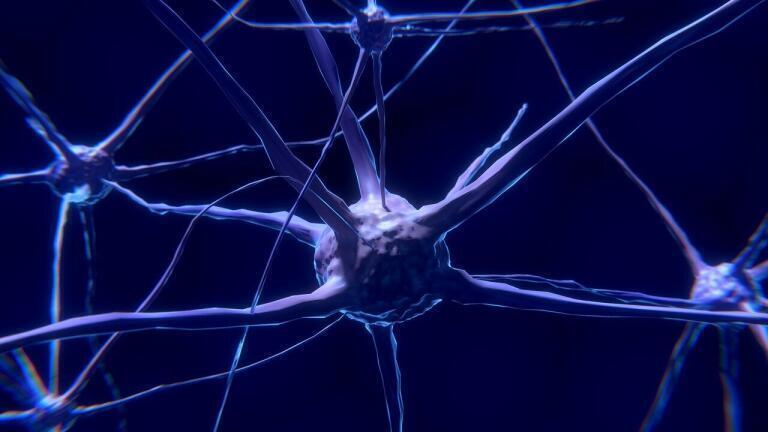
In a breakthrough that has the medical sphere buzzing, a team of engineers from the University of California Berkeley have developed a wireless 'pacemaker for the brain' that could usher in a new era of treatment for neurological disorders. The dual-functioning device stimulates and records electric currents in the brain, then uses data to fine-tune treatments for patients diagnosed with neurological conditions like Parkinson's and epilepsy.
Named the WAND, the next-generation device relies on two chips that are implanted in a chassis that's attached to the head. Each chip actively tracks activity from 64 electrodes in the brain while simultaneously preventing debilitating seizures or tremors by delivering electrical stimulation.
WAND has been likened to a pacemaker as it dynamically monitors electrical activity in the brain and reacts only when something is amiss. The acronym stands for Wireless Artifact-free Neuromodulation Device and is entirely autonomous, which allows it to independently adjust stimulation parameters depending on electrical activity. Closed-loop technology also equips it with the capacity to adjust parameters in real-time.
"The process of finding the right therapy for a patient is extremely costly and can take years. Significant reduction in both cost and duration can potentially lead to greatly improved outcomes and accessibility," explains Rikky Muller, assistant professor of electrical engineering and computer sciences at UC Berkeley. "We want to enable the device to figure out what is the best way to stimulate for a given patient to give the best outcomes. And you can only do that by listening and recording the neural signatures."
WAND overcomes the challenges associated with pinpointing extremely subtle electrical signatures by using integrated circuits that record both strong and slight pulses. This results in a clean signal that can be used to tweak delivery of electrical stimulation accordingly.
Rikky Muller, lead researcher at Cortera Neurotechnologies, the company that designed the custom integrated circuits used by WAND, asserts that precision is key when it comes to treating neurological conditions.
"Because we can actually stimulate and record in the same brain region, we know exactly what is happening when we are providing a therapy," he says. "In the future we aim to incorporate learning into our closed-loop platform to build intelligent devices that can figure out how to best treat you, and remove the doctor from having to constantly intervene in this process."
Want to know more about how cutting-edge developments are reimaginig modern medicine? Don't miss 'Choosing the Optimum Plasma Spectrochemistry Technique for Measuring Elemental Impurities in Pharmaceuticals.'
ILM 51.6 Sept 2026



 Product directory


.jpg)
.jpg)