Mass spectrometry & spectroscopy
Prototype MultiQ-IT system applies large-scale parallelisation to ion trapping, which has delivered up to 100-fold improvements in signal-to-noise ratio and opened a route towards single-cell molecular profiling at unprecedented depth
A prototype mass spectrometry platform that applies large-scale parallelisation has demonstrated a marked increase in sensitivity and throughput, in a development that could reshape analytical workflows from single-cell proteomics to drug discovery. The system – called MultiQ-IT – has shown the capacity to process vast numbers of ion populations simultaneously, rather than rely on the sequential analysis that continues to define most existing instruments.
Mass spectrometry has long served as a cornerstone analytical technique, with origins dating to the early twentieth century. The method enables scientists to identify and quantify molecules by ionising them and measuring their mass-to-charge ratio. Despite substantial engineering refinement, most platforms still analyse ions in series, typically one or a few species at a time. This constraint limits throughput and sensitivity, particularly in complex biological samples where rare but functionally critical molecules may remain undetected against a dominant background.
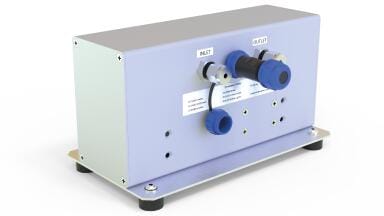
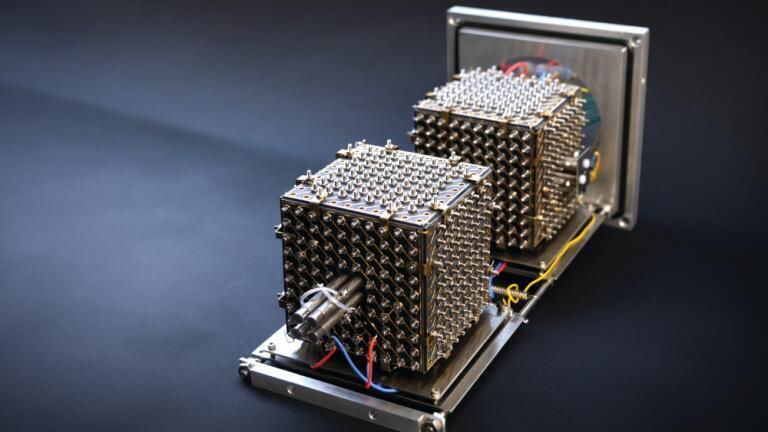
The MultiQ-IT approach has sought to address this limitation through architectural redesign rather than incremental optimisation. The prototype replaces the conventional ion trap with a cube-shaped chamber that incorporates hundreds, and in some configurations more than 1,000, electrically controlled apertures. Within this chamber, ions undergo repeated collisions with residual gas molecules which slows their motion and allows stochastic distribution across multiple pathways. This enables the instrument to filter, retain and direct numerous ion populations in parallel.
“What revolutionised DNA sequencing was not any change in the underlying chemistry. That has remained fundamentally the same.
“It was the ability to run so many chemical reactions in parallel which took genome sequencing from a billion-dollar effort to something that costs around $100. The same thing happened in computing with graphics processing units (GPUs).
“And that is what we are trying to do with mass spectrometry,” said Dr. Brian T. Chait, Camille and Henry Dreyfus Professor in the Laboratory of Mass Spectrometry and Gaseous Ion Chemistry at Rockefeller University.
The concept of massive parallelisation has transformed both computing and genomics. In computing, the introduction of GPUs enabled simultaneous execution of many smaller computational tasks which substantially increased performance. DNA sequencing followed a comparable trajectory, with platforms now able to interrogate millions of reactions concurrently at relatively low cost. The MultiQ-IT system has applied this principle to ion handling which has historically presented significant technical barriers.
“It was a very obvious idea, but how to do it with mass spectrometry was not obvious,” said Dr. Andrew Krutchinsky, senior research associate in the same laboratory.
The design has drawn inspiration from biological transport systems, specifically the nuclear pore complexes that regulate molecular traffic between the nucleus and cytoplasm. These structures distribute transport across many discrete channels rather than rely on a single conduit which enhances efficiency and avoids congestion. By analogy, the MultiQ-IT chamber distributes ion populations across numerous apertures, which allows simultaneous manipulation and analysis.
Experimental results have indicated a substantial increase in ion capacity and signal discrimination. A 486-port configuration has held up to ten billion charges at any one time, which represents an approximate thousand-fold increase relative to conventional ion traps. This expanded capacity has enabled more effective separation of low-abundance ions from high-abundance background species.
The system has applied a controlled electrical potential across the exit apertures to achieve selective depletion. Singly charged ions, which often constitute background noise, possess sufficient energy to escape the trap. Multiply charged ions, which are more likely to represent biologically informative molecules such as peptides, remain confined for analysis. This selective retention has improved signal-to-noise ratios by as much as 100-fold, which has allowed detection of proteins that previously fell below the threshold of detection.
The study has also addressed a fundamental physical limitation inherent in ion trapping. When large numbers of like-charged particles occupy a confined space, electrostatic repulsion can disrupt stability and reduce analytical performance. By distribute ions across multiple channels, the MultiQ-IT design has reduced local charge density and mitigated this repulsion, thereby preserve confinement efficiency.
These performance gains carry particular relevance for emerging fields such as single-cell proteomics and metabolomics. In contrast to nucleic acids, proteins and metabolites cannot undergo amplification and their abundance can vary by several orders of magnitude within a single cell. As a result, analytical sensitivity and dynamic range become critical determinants of success. The ability to detect low-abundance species, including crosslinked peptides that inform on protein structure, could expand the scope of molecular characterisation.
“The least abundant things can [often] be more important than the more abundant things,” said Krutchinsky.
At present, the MultiQ-IT system remains a proof-of-concept rather than a commercial instrument. The investigators have positioned their work as a foundational demonstration of feasibility, analogous to early milestones in semiconductor development or DNA sequencing technologies. Translation into robust, widely deployable platforms will require substantial engineering refinement and industrial engagement.
“There was a lot of development between the discovery of a reaction for sequencing DNA and modern genomics, and decades between the first transistor and putting a billion transistors on a chip.
“In both cases, someone first had to show it could be done and then industry took over. I think we have shown one way mass spectrometry can be done more efficiently,” Chait added.
The findings have therefore established a credible route towards next-generation mass spectrometry systems that combine high throughput with enhanced sensitivity. If successfully developed at scale, such platforms could enable comprehensive molecular profiling at the level of individual cells and accelerate analytical pipelines across biomedical research and pharmaceutical development.
For further reading please visit: 10.1126/sciadv.aec7048
ILM 51.6 Sept 2026





 Product directory