Mass spectrometry & spectroscopy
Published over 4 years ago. See the latest and most current information on Mass spectrometry & spectroscopy.
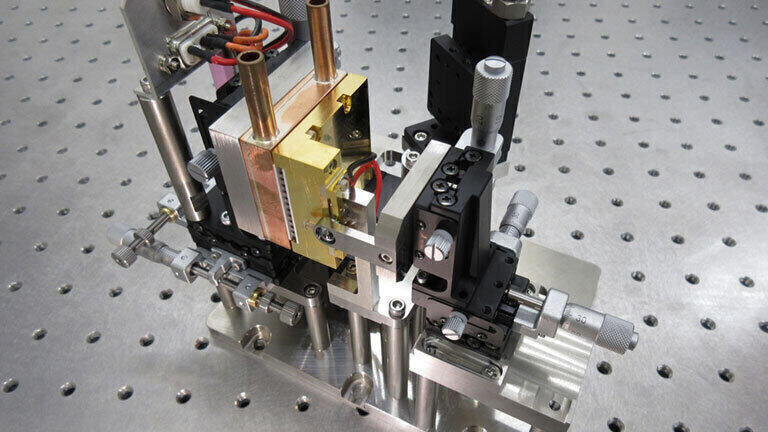
Hamamatsu’s breakthrough was achieved by analysing the principle governing the generation of terahertz waves, which enhance the QCL’s output power and the configuration of the highly efficient external cavity, while using our advanced optical design technology.
This research results in generating narrow-band terahertz waves all while switching the frequency of just one QCL module. This technology will help in polymer material identification as well as boost accuracy in quality evaluation for non-destructive inspection of drugs, foods, and semiconductors containing components that absorb terahertz waves. The QCL module using this technology will also prove to be a key innovative device for achieving future ultra-high-speed wireless communication.
The Optica Publishing Group in the electronic version of the scientific journal ‘Photonics Research’ published these research results on the 22 February 2022. Part of this research was commissioned by the Japanese Ministry of Internal Affairs and Communications, as a ‘Strategic Information and Communications R&D Promotion Program (SCOPE)’ (No. JP195006001).
For further information visit the website.
ILM 51.6 Sept 2026





 Product directory