Microscopy & microtechniques
Published over 12 years ago. See the latest and most current information on Microscopy & microtechniques.
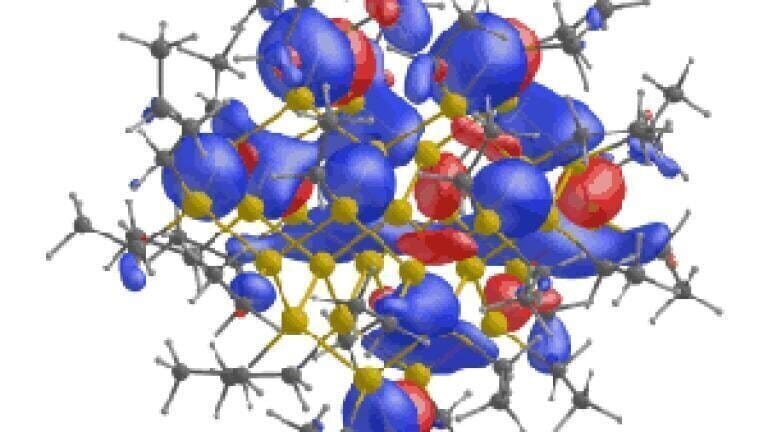
A nanocrystal is a tiny particle, composed mostly of crystalline elements, that has at least one dimension smaller than 1,000 nanometres. A nanometre is defined as one thousand-millionth of a metre, which can be expressed in decimal form as 10-9m. If the size of a nanoparticle reaches as small as below 10 nanometres, it becomes known as a quantum dot.
Nanocrystals differ from other crystals primarily in size, but this also has a knock-on effect on other properties. For example, the nanocrystals in silicon are able to emit light efficiently, whilst in larger silicon samples, this is not possible. This means they can be used in the composition of memory chips for computers. Similarly, nanoparticles that are found in solids have intriguing melting patterns when compared to other, conventional solids, and as such may form a distinct, specialised class of solids on their own.
What are the Proven Applications of Nanocrysals?
Because of their unique properties, nanocrystals have been found to be beneficial in a number of areas. Some of their established uses include:
What are the Potential Applications of Nanocrystals?
Nanocrystals have an exciting future in scientific technology. Here are some of the potential uses of nanocrystals:
- Drug Manufacture. Indeed, there are already nanocrystalline drugs on the market, but this market is set to explode exponentially in the coming years.
- Biological Detection. As our understanding of nanotechnology grows, we will be able to apply this to organisms at the single-cell level and learn more about them. In fact, such studies are already taking place in the makeup of coral reef.
- Magneto-optical Memory Chips. Due to their suitability to acting as memory components when in silicon form, nanocrystals could revolutionise our method of memory storage.
- Flat Panel Displays. Their light-emitting properties and diminutive size could allow even sleeker display sets than we have today.
- Removal of pollutants and toxins. Nanotechnology could help to sanitise substances and materials in the future as our knowledge grows.
ILM 51.6 Sept 2026





 Product directory


.jpg)