Microscopy & microtechniques
A cryogen-free optical-coupled scanning probe microscope based on remote helium liquefaction has enabled months-long uninterrupted atomic-scale imaging while eliminating dependence on volatile liquid helium supplies
A novel optical-coupled scanning probe microscopy platform has removed the long-standing dependence on liquid helium, enabling continuous atomic-scale imaging and spectroscopy at cryogenic temperatures for extended periods. The approach has addressed both cost and stability constraints that have historically limited high-resolution studies at the ångström scale.
Optical-coupled scanning probe microscopes combine scanning probe techniques with optical measurements to resolve atomic structures and probe electronic and chemical properties with extreme spatial precision. To achieve this level of performance, systems have traditionally required cooling to just a few degrees above absolute zero, typically through liquid helium.
However, helium supplies have remained volatile (Ed. no pun intended) and expensive, and conventional dewar-based cryostats require frequent refilling due to continuous boil-off, which interrupts experiments and introduces operational inefficiencies.
“Our previous system could only run for about two days before the helium ran out. It’s like you have to restart a movie every few minutes – you lose continuity and miss important details,’ said Professor Shijing Tan from the University of Science and Technology of China, Hefei, Anhui, China.
“Worse still, each refill requires more than 10 litres of liquid helium, which represents a significant operating cost,” he added.
To overcome these constraints, researchers at the Institute of Physics, Chinese Academy of Sciences, Beijing, China, in collaboration with Professor Tan, have extended a cryogen-free scanning probe microscopy architecture based on remote helium liquefaction.
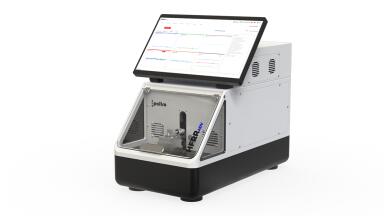
The system replaces conventional liquid helium reservoirs with a closed-cycle cryocooler that liquefies helium in a separate chamber before delivery to the microscope through a flexible transfer line. The evaporated helium gas is then recovered – re-liquefied – and recirculated within a continuous loop.
This remote liquefaction configuration has resolved several technical challenges simultaneously. It has removed the need for repeated helium refills, allowing uninterrupted operation for months. It has also physically separated the cryocooler from the microscope which has minimised mechanical vibration that would otherwise degrade atomic-scale resolution.
In addition, the compact design has increased the available space around the microscope, which has facilitated integration of optical components and complex experimental arrangements.
“Conventional cryocoolers mounted atop introduce annoying vibration to high-resolution scanning probe microscopy,” explained Dr. Qing Huan from the Institute of Physics, Chinese Academy of Sciences.
“By separating the cooling source from the microscope, we get the best of both worlds: continuous cooling without the vibration noise,” he said.
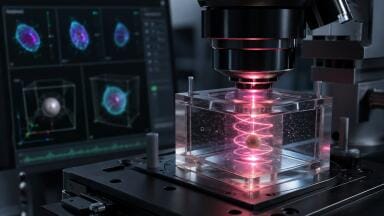
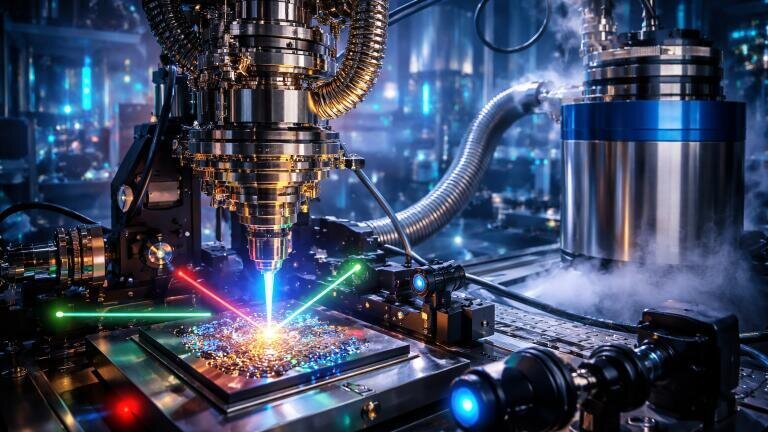
The system has achieved a base temperature below three kelvin and a tunnelling current noise level below 20 femtoampere per square root hertz, which matches the performance of leading liquid-helium-based instruments. It has supported multiple complementary imaging and spectroscopy modes, including scanning tunnelling microscopy for atomic structure, atomic force microscopy for bond-level contrast, scanning tunnelling spectroscopy to probe electronic states, tip-enhanced Raman spectroscopy for chemical identification, and scanning tunnelling luminescence to investigate optoelectronic behaviour.
To validate performance, the researchers examined silver phthalocyanine molecules on a silver substrate. Following thermal treatment of metal-free phthalocyanine, a self-metalation reaction occurred on the surface to form silver phthalocyanine. The multimodal platform enabled direct correlation of structural, electronic, and chemical information from the same molecule and location. The team resolved atomic structure with scanning tunnelling microscopy and atomic force microscopy, mapped electronic orbitals with scanning tunnelling spectroscopy, and identified vibrational signatures with tip-enhanced Raman spectroscopy, achieving sub-nanometre spatial resolution in chemical imaging.
“The same molecule, the same spot, multiple techniques – that’s the power of this system. Those experiments that previously took months to complete intermittently can now proceed without interruption, which makes the data more convincing,” said Huan.
Continuous operation over weeks or months enables investigation of slow or dynamic processes such as catalysis, surface diffusion, and molecular self-assembly, which have previously proved impractical under interrupted measurement conditions. The removal of reliance on liquid helium also reduces exposure to supply instability and cost escalation, an issue that has intensified as global shortages have driven prices to more than triple in recent years.
Looking ahead, the research team has indicated plans to integrate additional optical modalities and operate under higher magnetic fields, which could extend the platform’s utility in the study of quantum materials and single-molecule systems. The group has also identified potential for commercial deployment, with the aim to broaden access to high-performance, cryogen-free microscopy systems.
For further reading please visit: 10.1016/j.asi.2026.100011
ILM 51.6 Sept 2026





 Product directory