Microscopy & microtechniques
Published over 13 years ago. See the latest and most current information on Microscopy & microtechniques.
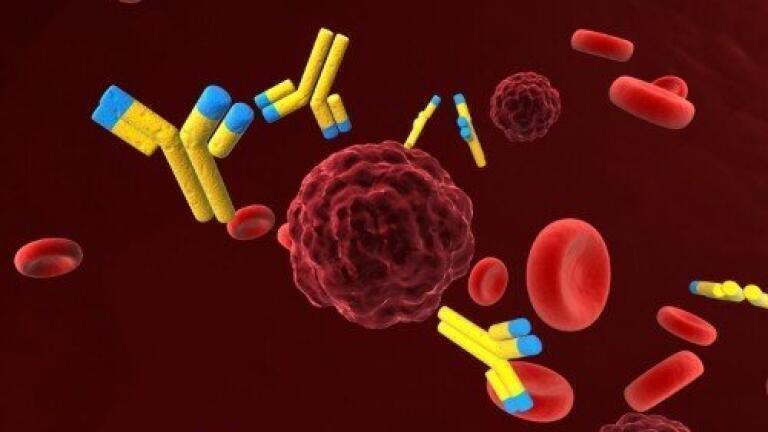
Balancing the immune system could help it fight cancer cells more successfully, according to new research conducted by scientists in the US. The human immune system is incredibly sensitive and relies on a specific balance in order to avoid it attacking the body's own cells. Scientists have now suggested that by upsetting this balance, cancer treatments could be more successful.
The study was performed at the Children's Hospital of Philadelphia and published in 'Nature Medicine'. The research was performed on animals and is not yet suitable for use in humans, but the results look promising.
The research focussed upon Treg cells, which are a common area of research when looking at autoimmune diseases and cancer. The Treg cells are an important part of the immune system that stops it from attacking the body's own tissues. The scientists experimented with disrupting the processes of the Treg cells, in an attempt to alter their function. By doing this the immune system could be encouraged to attack the cancerous cells.
In order to test this theory, mice were bred that did not have a chemical in their body, which is required for the Treg cells to function correctly. A drug was used on normal mice in order to achieve the same result. Both groups of mice were found to have immune systems that attacked cancer cells more rigorously and ultimately stopped the growth of lung cancer.
Doctor Wayne Hancock, leader of the study at the Children's Hospital of Philadelphia, said: "This preclinical study demonstrates proof of principle that using a drug to regulate the function of a special immunosuppressive subset of so-called T-regulatory (Treg) cells safely controls tumour growth. It really moves the field along towards a potentially major, new cancer immunotherapy."
More study is needed to be done on this new form of immunotherapy in order to see if it would be a successful form of treatment against human cancers. If the treatment is found to be successful in humans at a later stage, it could represent a new form of treatment in which people's own bodies provide part of the cure for cancer.
ILM 51.6 Sept 2026





 Product directory