Scientists at the Institut de Physique de Rennes and Princeton and Harvard Universities have detailed their latest microscopy news after studying closely the process which takes place when bubbles burst on a surface - such as the surface of a fizzy drink where it meets the air.
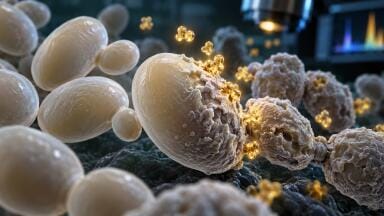
After looking closely at the bubbles as they pop, they have discovered that a torus is initially formed around the circumference of the area which was enclosed by the bubble.
This is unstable, however, so subsequently collapses into a number of bubbles around a tenth the size of their parent.
A further effect observed in the latest microscopy news from the team is the creation of tiny droplets of fluid thrown into the air from the surface; this can be felt by placing your face or skin close to the top of a freshly poured fizzy drink.
The research aims to assist in researching gas exchange between the ocean and the atmosphere, the presence of unwanted bubbles in glass production and other surface-related issues.





 Product directory