Microscopy & microtechniques
Published over 13 years ago. See the latest and most current information on Microscopy & microtechniques.
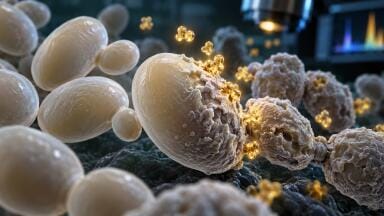
Stem cells extracted from human urine could be the answer to tooth loss. Researchers in China have reported that they have successfully used these stem cells to grow teeth. The research opens up new possibilities for those who suffer from tooth loss due to poor oral health or ageing.
Scientists from the Guangzhou Institute of Biomedicine and Health took cells from human urine in order to treat them so they became stem cells. The cells used are those that are naturally removed by the body as human waste and are much less controversial than the stem cells that can be extracted from embryos. These types of stem cells can be used to grow a number of different forms of human cells, such as neurons.
Until now these stem cells, known as pluripotent stem cells (iPSCs), have not been used to successfully grown into solid human tissues or organs. Doctor Duanqing Pei, from the Chinese Academy of Sciences, successfully cultivated the iPSCs so they would grow into two different types of cell - epithelial cells and mesenchymal cells. The epithelial cells can then become tooth enamel, whilst the mesenchymal cells can form dentin, pulp and cementum.
Scientists successfully used the epithelial cells mixed with mouse mesenchymal cells, extracted from embryos. These cells were transplanted into mice and over the course of weeks grew into small tooth-like structures. However, the teeth were not as strong as natural human teeth and the process only had a 30 per cent success rate.
The researchers have claimed that my further developing the technique it would be possible to grow stronger human teeth with the use of the stem cells. This could ultimately mean that they are able to cultivate teeth from human cells that fulfil all the functions of natural teeth.
The authors of the research said: "The revised method could, in theory, be used to create a bioengineered tooth bud that could be cultured in vitro then transplanted into the jawbone of a needy patient to form a fully functional tooth."
ILM 51.6 Sept 2026



 Product directory