Microscopy & microtechniques
Published over 13 years ago. See the latest and most current information on Microscopy & microtechniques.
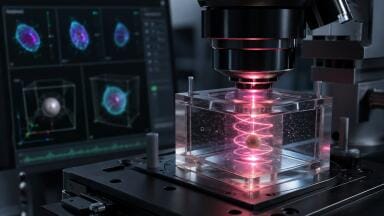
JPK Instruments reports on the Yan Jie single molecule biophysics research group at the Mechanobiology Institute of NUS and their use of optical tweezers.
The Mechanobiology Institute (MBI) of the National University of Singapore (NUS) was created through joint funding by the National Research Foundation and the Ministry of Education with the goal of creating a new research centre in mechanobiology to benefit both the discipline and Singapore. It’s primary focus is to identify, measure and describe how the forces for motility and morphogenesis are expressed at the molecular, cellular and tissue level.
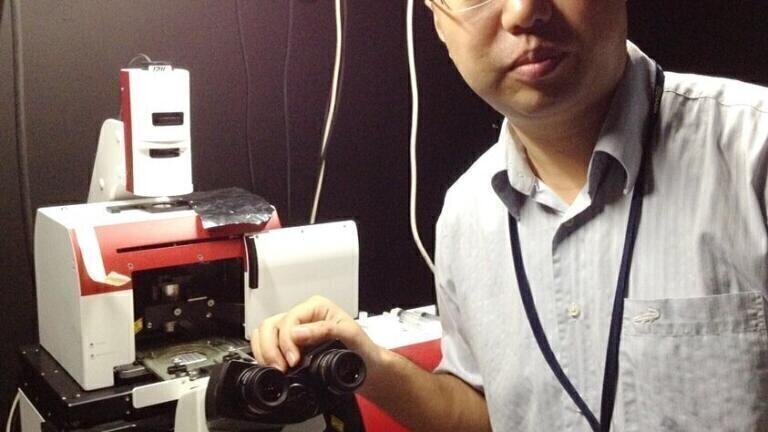
Dr Jie Yan is an Associate Professor in the Department of Physics of NUS and is a Principal Investigator of the MBI. His research is based on highly sensitive single-molecule manipulation and imaging techniques. It also requires understanding mechanics of biopolymers. One of his team, Dr Hu Chen, is a post-doctoral research fellow and he described his topics of research. "We are doing single molecular biophysics studies. The projects cover DNA mechanics, protein-DNA interaction, chromatin dynamics, and cytoskeleton dynamics and force-sensing mechanism. We chose to use the JPK Instruments commercial NanoTracker® system to study the polymerisation process of cytoskeletal fibres such as actin and microtubules by combining fluorescence and manipulation methods."
He continued: "Before purchasing the NanoTracker, our main tools were magnetic tweezers and AFM. Now with optical tweezers, we have a complimentary powerful system that combines manipulation of molecules, measurement of their force responses, as well as seeing them by fluorescence tagging. Such capability makes some difficult projects doable, and we already have some progress to see the polymerisation process of actin fibres."
For single molecule manipulation, the group is using magnetic tweezers. For fluorescence imaging, they use TIRF microscope. AFM is also used to image DNA or protein/DNA complexes deposited on flat mica surfaces. As Dr Chen said, "Now with the JPK NanoTracker, we have a convenient means to combine both molecular manipulation with fluorescent imaging."
ILM 51.6 Sept 2026





 Product directory


.jpg)