News
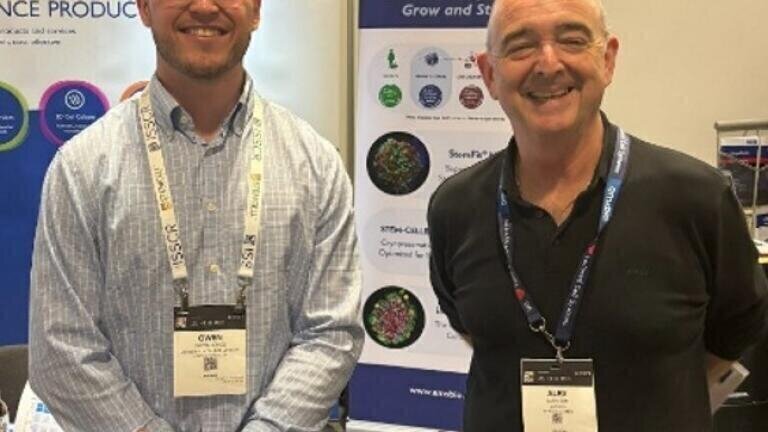
Dr Owen Jones, recipient of the 2024 ISSCR Travel Grant supported by Amsbio, reflects on his work developing human stem cell–derived retinal organoids and their growing role in understanding and treating retinal disease.
Millions of people worldwide live with retinal disorders, many of which remain untreatable and severely impact quality of life. Traditional models, from animal studies to 2D cell cultures, often fall short in replicating the complexity of the human retina. Retinal organoids — 3D mini-retinas grown from human stem cells — are helping to bridge that gap. By capturing the intricate multicellular architecture of retinal tissue, these organoids faithfully mirror key stages of human retinal development, making them a powerful platform for studying disease mechanisms.
In his guest blog, Dr Jones highlights how retinal organoids are accelerating research into new therapies. From modelling inherited retinal diseases to testing potential treatments, these lab-grown tissues provide a biologically relevant, human-specific system that could pave the way for next-generation cell replacement therapies. Their ability to replicate the human retina in miniature also opens opportunities for drug discovery and precision medicine, offering hope to patients affected by sight loss.
Reflecting on his own research journey, Dr Jones notes that advances in retinal organoid technology are not only expanding the toolkit for scientists but also providing a glimpse into the future of regenerative medicine. With continued innovation, stem cell–derived organoids may one day help restore vision for those living with retinal degeneration.
Read the informative guest blog in full.
More information online
ILM 51.6 Sept 2026




 Product directory