News
Published over 13 years ago. See the latest and most current information on News.
US developers are working to create a 'bioink' suitable for use with 3D printers that will allow the creation of human tissue.
University of Iowa Collere of Engineering's Center for Computer Aided Design's research department Advanced Manufacturing Technology (AMTecH) is experimenting with some of the latest innovations in lab equipment.
Working groups at AMTecH are working on a range of projects, including one to develop replacement tissue for human organs that are failing or damaged.
Another team is working on printed circuit boards for road vehicles and aircraft, showing the variety of technology used in the department.
AMTecH co-director Tim Marler said: "Electromechanical systems are one of two current branches of the AMTecHgroup.
"We want to simulate, analyze and test printed circuit boards and assemblies, because they are used in a wide range of products from missiles to power plants to cell phones."
Assistant professor of mechanical and industrial engineering and AMTecH co-director Ibrahim Ozbolat leads the human tissue project.
Marler added: "The long-term goal of this branch is to create functioning human organs some five or 10 years from now. This is not far-fetched."
Mr Ozbolat commented: "One of the most promising research activities is bioprinting a glucose-sensitive pancreatic organ that can be grown in a lab and transplanted anywhere inside the body to regulate the glucose level of blood."
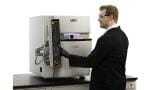
The project is already using innovative technology, with a unique multi-arm bio printer taking centre stage in the lab. Mr Ozbolat and University of Iowa doctoral student Howard Chen designed the machine, which is more complex than other models on the market.
One of the benefits of this lab equipment over more standard technology that uses one arm is that several materials can be printed concurrently, instead of layers of materials being created consecutively by a single arm.
The AMTecH biomanufacturing group has already receive support from national organisations for the project, including the National Institutes for Health.
Earlier this week, it was revealed Cohera Medical is to begin human trials of its Sylys Surgical Sealant.
ILM 51.6 Sept 2026

 Product directory













.jpg)
,-photo-Karin-Allander.jpg)