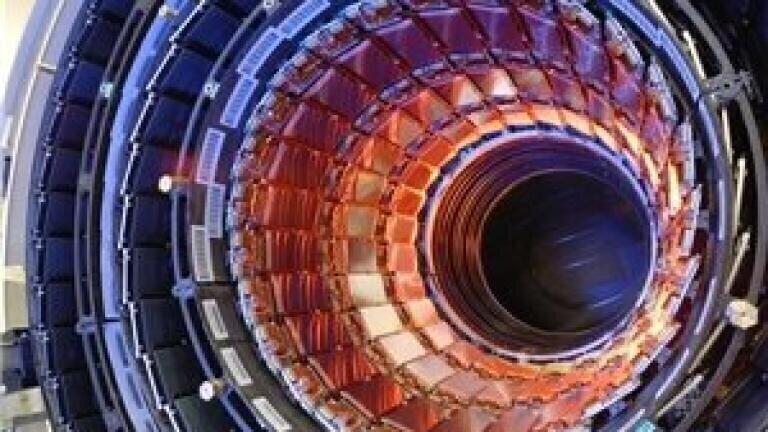
Scientists working at the Large Hadron Collider (LHC) are embarking on a heavy metal phase as the system is used for the first time to study lead ions.
As before, the ions will be accelerated and collided to study the interactions which occur; however, this is the first introduction of lead into the apparatus following the completion of planned experiments involving protons on November 4th.
The milestone of 100 nonillion collisions per square centimetre per second - a measure of luminosity in the LHC which governs how much data can be collected - was reached on October 13th.
By the end of the proton physics phase, it had been doubled, increasing by a factor of two the rate of data collection.
Now the lead phase intends to replicate conditions in the newborn universe by creating quark-gluon plasma similar to the very first matter that ever formed.
The LHC embarked on its physics programme on March 30th 2010 and is due to continue studying particle interactions over a period of between 18 and 24 months.




 Product directory