News
Published over 10 years ago. See the latest and most current information on News.
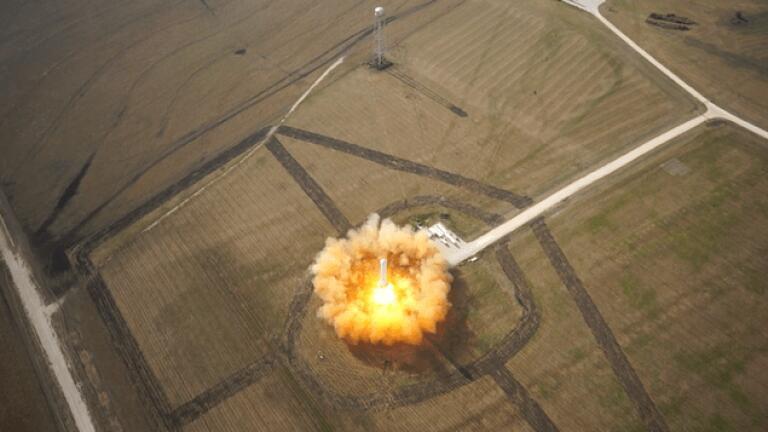
Terrible news for NASA and SpaceX on Thursday 1st September, as their Falcon 9 rocket exploded on its launch-pad in Florida. Since the catastrophic explosion, both NASA and SpaceX have released statements. Other than a spectacular movie-like explosion, the incident could have several other impacts. So what do we know about this disaster, and what are we yet to find out?
It was just past 9am local time when the rocket, which stands at 229 feet, burst into flames. Falcon 9 was set to undergo a static test-fire, where the engines are fired without launching. Luckily, because of this, there were no crew on-board.
However, with explosions of this size there is still a risk of the impact harming people further afield. So far, no injuries have been announced, but the noise of the blast was heard up to 30 miles from the Cape Canaveral Space Launch Centre. The only impact was on nearby homes. Windows were shattered and some doors within a certain radius were knocked off homes.
The main impact of the loss is financial in this case. Falcon 9, which cost around 60 million US dollars, was completely destroyed in the incident. Attached to it was the Amos-6 satellite. When deployed, Amos – Affordable Modular Optimized Satellite – was set to be utilised by Facebook for their Internet.org service.
They planned to provide internet access to developing countries, but only for certain services and sites such as Facebook, Wikipedia, ESPN and Accuweather. It is thought to have cost around 200 million dollars, pushing the financial loss up considerably.
At the moment, the cause hasn’t been confirmed, but the statement from SpaceX gives some insight. “At this time, the data indicates the anomaly originated around the upper stage liquid oxygen tank”, they explain. With the launch originally schedules just two days after the incident, on September 3rd, it looks like this will be a considerable setback for the Internet.org project.
It isn’t just internet connection that deprives these developing countries. There is also an issue known as light poverty. In over 20% of the world, there is no proper light source after sunset. This means darkness, or the small light provided by candles. Among other things, effective lighting is essential for work, education and healthcare. The importance of light is explored in ‘Bright Lights, Big Science: The physical phenomenon that has helped to shape human history and open up our world’.
ILM 51.6 Sept 2026



 Product directory


.jpg)