News
Published over 15 years ago. See the latest and most current information on News.
A Europe-wide project involving a consortium of research institutes, universities and industrial partners is looking at ways to turn waste products from processes such as spruce chips from paper-making, wheat straw from farming and waste bran from milling into bioethanol. A major constituent of these renewable products is lignocellulose, a complex mixture of carbohydrate molecules bound to lignin, the component that forms the basis of wood. The molecular nature of lignocellulose makes it resistant to the actions of microorganisms that could otherwise convert it to simple sugar molecules needed to make biofuels. The EU-funded DISCO project is hoping to find species of microorganisms which have evolved the highly specialised ability to break down the resistant lignocellulose material.
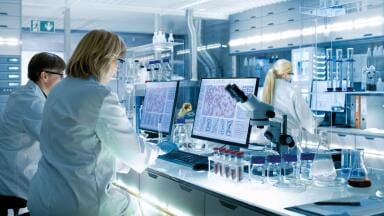
Libraries of microorganisms are a key resource for the research community; for example, the Budapest University of Technology and Economics (BUTE), a partner in the DISCO project, holds a library of over 4000 different microorganisms obtained from a multitude of different sources. From these a number of promising candidates for lignocellulosic enzyme activity have already been indentified and are being further characterised in the labs of other DISCO project partners.
“We’re looking to nature to find answers to the problem of efficiently generating next-generation biofuels from renewable sources, in this case from abundant waste materials from farming and industry,” said Professor Kristiina Kruus, an expert in the enzymology of plant cell wall polymers. “That answer could literally be lying in the soil, in an undiscovered and uncharacterised microorganism.”
The overall aim of the project is to end up with a cocktail of microorganism-derived enzymes that can simultaneously breakdown the complex lignocellose into simple sugars, and enable yeast co-fermentation to produce bioethanol. Initially a pilot scale plant will be developed. However, the starting materials, wheat straw, bran and spruce, are found in abundance throughout Europe as waste materials, so it is hoped that the DISCO project will lead to full scale plants producing biofuels across the continent.
ILM 51.6 Sept 2026




 Product directory