News
Published over 4 years ago. See the latest and most current information on News.
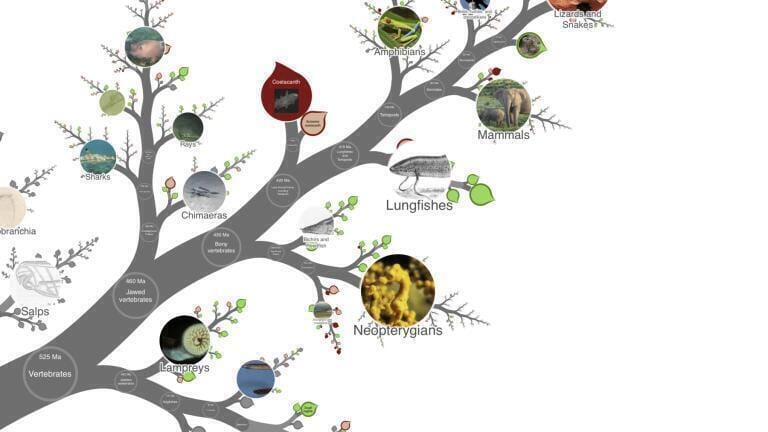
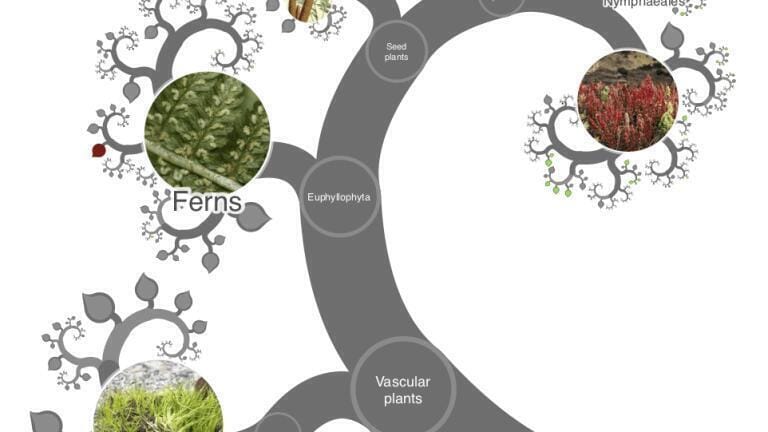
A visually stunning interactive tree of all known life developed by researchers at Imperial College London and the University of Oxford maps the connections between 2.2 million living species, the closest thing yet to a single view of all species known to science. The OneZoom explorer – available at onezoom.org – enables users to view images of over 85,000 species, explore its relationships with others and includes, where known, information on their vulnerability to extinction.
The project is the culmination of over ten years of work by biodiversity researcher Dr James Rosindell and evolutionary biologist Dr Yan Wong, gradually creating what they regard as “the Google Earth of biology”.
Dr Wong, from the Big Data Institute at the University of Oxford, said: “By developing new algorithms for visualisation and data processing, and combining them with ‘big data’ gathered from multiple sources, we’ve created something beautiful. It allows people to find their favourite living things, be they golden moles or giant sequoias, and see how evolutionary history connects them together to create a giant tree of all life on Earth.”
Dr Rosindell, from the Department of Life Sciences at Imperial, said: “We have worked hard to make the tree easy to explore for everyone, and we also hope to send a powerful message: that much of our biodiversity is under threat.”
Leaves representing each species on the tree are colour coded depending on their risk of extinction: however, most of the leaves on the tree are grey, meaning they have not been evaluated, or scientists don’t have enough data to know their extinction risk.
Dr Wong added: "It’s extraordinary how much research there is still to be done. Building the OneZoom tree of life was only possible through sophisticated methods to gather and combine existing data – it would have been impossible to curate all this by hand.”
Configured to work with touchscreens, OneZoom has free downloadable software for use by educational organisations such as museums and zoos.
Dr Rosindell commented: “Two million species can feel like a number too big to visualise, and no museum or zoo can hold all of them! But our tool can help represent all Earth’s species and allow visitors to connect with their plight. We hope that now this project is complete and available, many venues will be interested in using it to complement their existing displays.”
Drs Rosindell and Wong have also set up a OneZoom charity with leaves on the tree available for sponsorship in support of their “ongoing mission to advance the education of the public in the subjects of evolution, biodiversity and conservation of the variety of life on Earth.”
The team have also integrated the tree with data from the Wikipedia project to reveal the ‘popularity’ of every species, based on how often their Wikipedia page is viewed. Dr Wong said: “Perhaps unsurprisingly, humans come out on top, but it has swapped places a few times with the second most popular: the grey wolf – the ‘species’ that includes all domestic dogs.”
Dr Rosindell added: “With OneZoom, we hope to give people a completely new way to appreciate evolutionary history and the vastness of life on Earth in all its beauty.”
Published in Methods in Ecology and Evolution.
More information online
ILM 51.6 Sept 2026





 Product directory


.jpg)





















.jpg)